Get flexible financing and instant approvals for urgent home repairs—apply online today.

Tag: Plumbing services

Plumbing services in Lake Havasu City, AZ

Why Are Your Water Pipes Making Noise? 6 Causes Explained

Hearing strange sounds from your plumbing can be frustrating and concerning. If you notice your pipes making noise, it often signals an underlying issue that needs attention. From banging and rattling to hissing and gurgling, different plumbing noises in pipes can point to specific problems within your system.

Understanding what these sounds mean helps you identify issues early and prevent costly damage.

Common Types of Plumbing Noises in Pipes

Different sounds often indicate different problems. Paying attention to when and where the noise occurs can help narrow down the cause.

  • Banging or hammering: Often caused by sudden changes in water flow
  • Rattling or vibrating: Usually linked to loose pipes
  • Hissing or whistling: Can indicate high water pressure
  • Gurgling sounds: Often caused by trapped air or drainage issues

Recognizing these plumbing noises is the first step toward fixing the problem.

Water Hammer and Banging Pipes

One of the most common causes of pipe noise is water hammer. This happens when water flow suddenly stops, creating a shockwave inside the pipes. The result is a loud banging or knocking sound.

Water hammer can occur when:

  • Faucets or valves close quickly
  • Appliances like dishwashers or washing machines shut off water flow
  • Pipes lack proper cushioning or support

To fix this issue, plumbers may install water hammer arrestors, adjust water pressure, or secure pipes to reduce movement.

Loose Pipes and Vibrations

If your pipes rattle or shake when water flows, they may not be properly secured. Loose pipes can move against walls, floors, or other surfaces, creating noticeable noise.

This type of plumbing noise can worsen over time and lead to wear or damage. Securing pipes with proper brackets or cushioning helps stabilize the system and reduce vibrations.

High Water Pressure Problems

High water pressure may seem beneficial, but it can cause serious issues. Excess pressure places strain on your plumbing system and often leads to noise, especially hissing or vibrating sounds.

Signs of high water pressure include:

  • Loud noises when turning on faucets
  • Frequent leaks or worn fixtures
  • Sudden bursts of water flow

Installing a pressure-reducing valve helps maintain safe pressure levels and protects your plumbing system.

Air Trapped in Pipes

Air pockets inside your plumbing system can create gurgling or bubbling sounds. These noises often occur when water flow becomes uneven due to trapped air.

Air can enter the system during repairs, leaks, or improper venting. A plumber can release trapped air and ensure your system is properly vented to restore smooth water flow.

Blockages and Drain Issues

Partial blockages can also cause unusual sounds. When debris builds up in pipes, water flow becomes restricted, which may lead to gurgling or slow drainage.

Common causes of blockages include:

  • Grease buildup
  • Hair and debris
  • Non-flushable items

Addressing clogs early helps prevent larger plumbing issues and keeps your system running quietly.

How to Prevent Plumbing Noises

Regular maintenance plays a key role in preventing pipes from making noise. Taking a few simple steps can help keep your system in good condition.

  • Check for loose or exposed pipes
  • Monitor water pressure levels
  • Avoid flushing or draining inappropriate materials
  • Insulate pipes in colder areas
  • Schedule routine plumbing inspections

These steps help reduce noise and extend the life of your plumbing system.

When to Call a Professional

Some plumbing issues require expert attention. If you continue to hear loud or persistent noises, it is best to contact a professional.

A licensed plumber can:

  • Identify the exact cause of the noise
  • Recommend the right repair solution
  • Prevent further damage to your system

Addressing problems early helps avoid costly repairs and keeps your plumbing system functioning properly.

Keep Your Plumbing System Running Smoothly

If your pipes are making noise, do not ignore the warning signs. Understanding the cause of these sounds allows you to take action before small issues turn into major repairs.

With proper maintenance and timely repairs, you can reduce plumbing noises and keep your home running efficiently.

Water heater services in Lake Havasu City, AZ

How to Extend the Life of Your Home’s Water Heater

Replacing a water heater is an inevitable part of home ownership. Most homeowners want to get the longest possible service life out of their home’s water heater. Here is a look at how you can extend the time that your water heater serves your household.

Get the Installation Right

When you initially purchase a water heater, invest in getting the installation right. A quality installation should help you avoid costly repairs. Our plumbers follow the manufacturer’s installation guidelines to ensure safety, effectiveness and efficiency.

Note that your water heater’s size directly impacts its effectiveness and lifespan. A unit that’s too small will work overtime to meet your household’s demands, potentially shortening its service life. Conversely, an oversized system wastes energy. You may also want to look at installing a tankless water heater when the time for a replacement comes. A tankless system eliminates the need to store water and repeatedly reheat it.

The installation location of a gas system needs proper ventilation to prevent dangerous gas buildup and maintain optimal operating conditions. For gas water heaters, this means ensuring the vent pipe remains unobstructed and properly sealed. Securely anchoring the water heater protects it from potentially damaging movements, such as when someone might bump against it. Also, you should position the unit with future maintenance in mind, leaving enough space for easy access to components. Thoughtful placement makes routine maintenance simpler, encouraging regular service and extending the system’s life.

Water Quality

Water quality is essential to a water heater’s longevity, with hard water posing one of the biggest threats to the system’s performance and service life. Hard water contains high levels of calcium and magnesium that create scale buildup inside the tank. This scale forms an insulating layer on heating elements and tank walls, forcing your water heater to work harder and consume more energy.

Beyond hard water concerns, high levels of chlorine and other disinfectants in municipal water supplies can accelerate corrosion inside your tank. These chemicals, while necessary for safe drinking water, can break down your tank’s protective inner lining and damage the anode rod that shields your tank from rust. Some areas also have naturally occurring minerals like iron and manganese that create sediment buildup in your tank.

Installing a whole-house water filtration system is the simplest and broadest solution. Filters remove harmful chemicals, sediment and excess minerals before water ever enters the water heater. For hard water specifically, a water softener can prevent scale formation by removing calcium and magnesium through an ion exchange process.

Draining and flushing a water heater will also hold back scaling. The process gets residual calcium, magnesium and chlorine out of the system. It also ensures that fresh water circulates in the system with lower concentrations of minerals and chemicals that encourage scaling. The requirements for draining and flushing a water heater vary by manufacturer, so check the manual to see how often both are necessary.

Routine Maintenance

Routine maintenance is your water heater’s best defense against expensive repairs and potential early failure. In the same way a car needs regular service, your water heater needs consistent care to perform at its best and achieve its maximum lifespan. A well-maintained water heater can last several years beyond its expected service life, meaning you’ll accrue significant savings. In addition to draining and flushing the water heater, here are some other maintenance tasks.

The temperature and pressure relief valve plays a crucial role in your water heater’s safety system. During checkups, our plumbers test this valve annually by lifting and lowering its handle so that they can listen for the proper release of water into the drain tube.

Your water heater’s anode rod protects the tank from corrosion, acting as a sacrificial component that wears out instead of your tank. Check this rod every six months and replace it when it shows significant deterioration. A good metric that the anode rode is due for replacement is when more than 6 inches of the core wire is exposed. Timely replacement of the anode rod can double your water heater’s lifespan by preventing rust and leaks.

Homeowners should also check the area around the water heater for signs of trouble every three months. Look for water stains around pipe connections, listen for unusual sounds and monitor your water heater’s performance. Check the area around your unit for moisture, rust or white mineral deposits that might indicate a developing leak. Generally, the sooner you catch these problems the more cost-effective the solution will be.

Track your routine maintenance schedule, too. Keep a written log with dates and notes. If you’re too busy to track the schedule, our company would be happy to set up a recurring calendar of appointments.

Improve the Water Heater’s Energy Efficiency

Energy efficiency affects more than just your utility bills. Efficiency also directly influences your water heater’s lifespan. Running your water heater at unnecessarily high temperatures forces it to work harder, accelerating wear on the heating element and other critical components. Even if you catch the problem with regular checkups, you will incur additional costs keeping up with the maintenance work.

Setting the water heater’s temperature to 120 degrees Fahrenheit strikes an ideal balance between comfort and efficiency. This temperature provides plenty of hot water for most household needs while preventing scalding risks and reducing energy consumption. Every 10 degrees you lower the temperature should cut your energy costs roughly by 3%-5% while extending the water heater’s life.

Installing water-efficient fixtures throughout your home reduces demands on your water heater, too. Low-flow showerheads and faucet aerators can cut hot water usage by up to 60% without sacrificing water pressure. Modern high-efficiency dishwashers use dramatically less hot water than hand-washing dishes, reducing the workload on both you and the water heater.

Insulating hot water pipes and the water heater itself will also prevent heat loss. A well-insulated system reduces how often the unit needs to reheat water. In addition to lengthening the service life of your home’s water heater, insulation also will cut your monthly energy bills.

Replace and Upgrade

As much as you may want to get the most out of a water heater, the time will come to replace it. Take the opportunity to upgrade to a more efficient model that’s sized properly for your household. Replacing the water heater sooner ensures that you won’t have to deal with a major leak, too.

You should budget for an eventual replacement. Factors like system design, water quality, usage and simple luck will cause some variance in the service life of a water heater. Typically, gas water heaters should provide at least 10 years of service, electric water heaters will last a few years longer and tankless systems last at least 20 years.

Air Control Home Services takes on a variety of plumbing jobs for the people of Lake Havasu City, Mohave County and the surrounding areas. We perform installations, repairs, upgrades and maintenance on a wide variety of systems. If you want to get the most out of your home’s water heater, contact us today for a consultation.

Plumbing Service in Lake Havasu City, AZ

Smart Ways to Slash Your Arizona Water Bill

Saving water also helps you save money in your Arizona home. Simple changes can result in significant savings whether you want to reduce household expenses or contribute to conservation efforts. Learn more about some basic changes that you can make that will help you slash your water bill.

Indoor Water-Saving Tips

While outdoor water usage often represents a large portion of the average Arizona household’s consumption, there are still plenty of ways to reduce water use indoors.

Installing water-efficient fixtures is one of the best ways to reduce your home’s water usage. Look for WaterSense-labeled faucets, showerheads, and toilets. The Environmental Protection Agency’s (EPA) WaterSense program certifies appliances that use at least 20% less water than standard models. Simply by choosing a low-flow showerhead model, you can save as much as 2.5 gallons of water each minute!

Toilets consume nearly 30% of indoor water in homes. Replacing an older toilet with a WaterSense model can save approximately 13,000 gallons of water per year. If replacing your toilet isn’t an option, consider installing a dual-flush conversion kit, which gives you control over the amount of water used as you flush. Kitchen and bathroom faucets can use up to 2.2 gallons of water per minute. Switching to a WaterSense faucet or adding an aerator to your current one can cut water usage by 30% or more.

Leaky faucets, toilets, and pipes are common culprits of high water bills. Regularly check all fixtures for leaks and fix them immediately. Even small leaks can add up over time. Toilets often have silent leaks, which can be tricky to detect. You can test for a leak by adding a few drops of food coloring to the toilet tank. If the color seeps into the bowl without flushing, you have a leak.

Showering accounts for a significant portion of indoor water use. While installing a low-flow showerhead helps, shortening your showers can also make a big impact. Reducing your shower time by just a few minutes can save thousands of gallons of water each year. Invest in a simple shower timer to remind everyone in your household to limit their time in the shower. Even cutting back by a minute or two can result in noticeable savings.

When it comes to appliances, your washing machine and dishwasher are two of the biggest water users. Newer models are much more water-efficient than older ones. Suppose it’s time to replace your washing machine. Choose a high-efficiency model. These machines use significantly less water per load than older top-loading machines, sometimes as much as 50% less. Regardless of the type of washing machine or dishwasher you have, make sure to run full loads whenever possible. Running your appliances less frequently will reduce your overall water usage.

Outdoor Water-Saving Tips

Arizona’s hot, dry climate makes outdoor water conservation especially important. Smart landscaping choices, efficient irrigation, and mindful pool maintenance can help you save as well.

Traditional lawns require a lot of water, especially in Arizona’s hot climate. Xeriscaping is a landscaping technique that uses drought-resistant plants and minimizes the need for irrigation. By opting for xeriscaping, you can drastically reduce your outdoor water use while still enjoying a beautiful yard. Choose native Arizona plants like agave, cactus, mesquite trees, and desert marigolds. These plants thrive in dry conditions and require minimal watering. You can also replace grass with gravel, mulch, or decorative rocks.

For homeowners with gardens or lawns, learning how to conserve water while watering is important. Overwatering is a common problem in Arizona, where evaporation rates are high. To reduce evaporation, water your foliage in the morning or evening. Midday watering wastes water as it quickly evaporates in the heat.

If you have a pool, it’s also important to consider reducing water loss there and evaporation is the key to cutting back on pool-related water expenses. One of the simplest ways to reduce water loss is by using a pool cover. Covering your pool when it’s not in use reduces evaporation by up to 95%, helping you save thousands of gallons of water each year. Regularly check your pool’s water levels and adjust them as needed. Overfilling the pool can lead to unnecessary water loss through splashing and overflow.

Mindful Water Habits

Along with updating your home’s fixtures and landscaping to use less water, being more aware of how much you use can make a big difference in lowering your water bill.

Water conservation is a team effort. Teach your kids and other family members why it’s important to save water and encourage them to start doing things that will help them do that. If everyone in the house does simple things like turning off the water while you brush your teeth or taking shorter showers, it can make a big difference.

Though Arizona is known for its dry climate, the state still experiences seasonal rain. Collecting rainfall can help you limit your reliance on municipal water supplies for tasks such as watering plants and gardens. Rain barrels are an inexpensive and easy way to harvest rainwater for later use. Install rain barrels beneath your home’s downspouts to collect and store water during rainstorms.

Washing your car at home can use up to 100 gallons of water, especially if you leave the hose running. Instead, consider using a commercial car wash that recycles water, or wash your car less frequently to save water. If you do wash your car at home, use a spray nozzle with an automatic shut-off feature to minimize water waste. This ensures water is only used when necessary.

How A Professional Plumbing Company Can Help

A professional plumbing company can help Arizona residents save money on their water bills by providing expert assessments and repairs. Licensed plumbers are trained to detect leaks and inefficiencies in your plumbing system that would go unnoticed by the average homeowner. For example, they can perform thorough inspections to detect hidden leaks behind walls or beneath floors, which can result in significant water loss over time. By promptly repairing these leaks, homeowners can avoid high water bills and extensive property damage. Plumbing professionals can also recommend water-saving fixtures and appliances that follow local regulations, ensuring that you make decisions that maximize water efficiency and reduce waste.

Additionally, a professional plumbing company can help with regular maintenance, which is essential to protect your plumbing system and avoid costly emergencies. By scheduling routine inspections and maintenance, plumbers can detect minor issues before they become major problems that necessitate costly repairs. Routine drain cleaning, for example, can help to prevent clogs and backups that would otherwise result in emergency calls and increased water usage. Furthermore, many plumbing companies provide maintenance plans that include regular check-ups at a discounted rate, which helps to reduce your long-term costs.

Contact Us Today

Ready to save money with your water bill? Contact Air Control Home Services today and we can help you make changes to your plumbing system and home technology in order to save dollars and conserve water. We also can help you with air conditioning, heating, indoor air quality, water heater, pipe repair, lighting, EV charger, and whole home wiring needs.

Water heater services in Lake Havasu City, AZ

Tips for Choosing the Right Water Heater for Arizona Home

Updated: 4/30/25

A water heater in your Arizona home is essential to modern convenience and comfort. It may cost you a lot more than you expect. Usage can be as much as 20% of your total energy costs. Choosing the perfect water heater is about striking the right balance between need and cost. The plumbing team at Air Control Home Services explains everything that will help you choose the ideal model for your home.

Contact Us

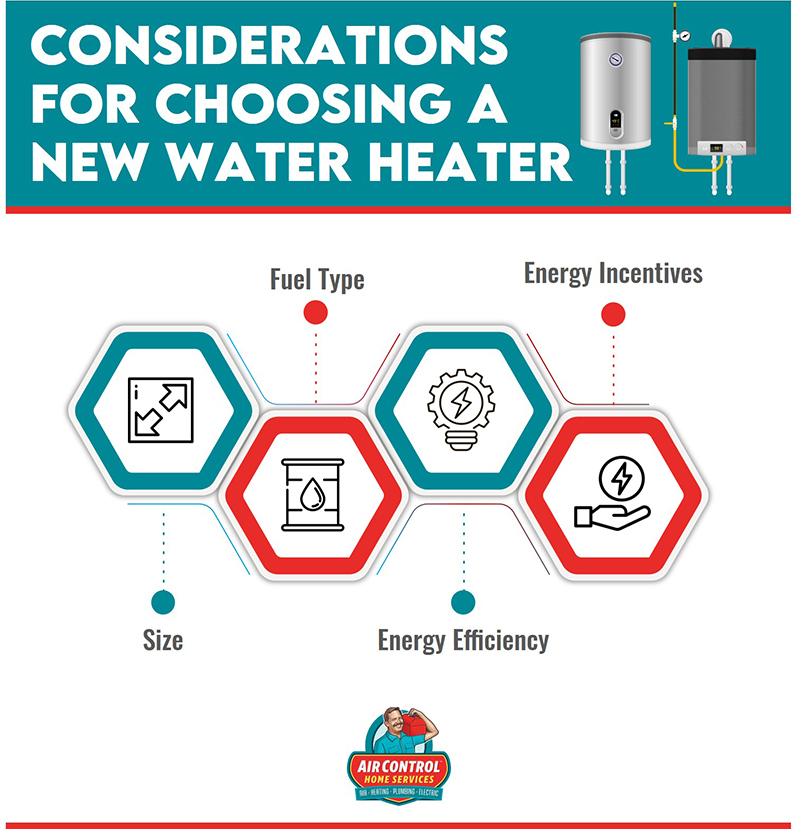
Size

The size or capacity of a water heater determines how much hot water it can provide you within a given time frame. This is an important factor on a number of fronts. If your water heater is too small, you’ll either run out of hot water or experience low hot water pressure. If your water heater is too big, you’ll spend unnecessarily up front and will be unlikely to recoup that expense.

With certain configurations, such as tank water heaters, you’ll be spending more each day you use the system. This is why we strongly encourage involving a professional installer early in the process. Our plumber can help you size your system, stay within your budget, and get good overall value.

Fuel Type

choosing new water heaterThere are electric water heaters and fuel water heaters that burn either gas or oil. Traditionally, electric water heaters are cheaper initially but more expensive in the end. Fuel-burning water heaters are more expensive initially but cheaper in the end. There are some exceptions to this rule, which we’ll discuss in upcoming sections.

Electric systems are generally cleaner. Fuel-burning systems combust gases to heat water. As a byproduct, they create dangerous gases that the system needs to vent safely. This makes it imperative to have gas and oil water heaters serviced each year. You must also have carbon monoxide (CO) detectors that require regular testing and replacement. If you have natural gas access, it’s typically the best option. If not, you’ll generally need to go with propane, which you’ll store in a tank. Oil-burning water heaters aren’t common in the region.

Energy Efficiency

The more efficient a water heater is, the less power or fuel it’ll use and the cheaper it’ll be to run. There are two ratings to consider: Uniform Energy Factor (UEF) and First Hour Rating (FHR). UEF indicates how efficient a water heater is overall. You can use it to compare one water heater to another. The rating is most useful when comparing like models, such as comparing a natural gas water heater to another natural gas water heater. FHR indicates how much hot water a system can produce during the first hour of use. This is helpful for distinguishing between two highly efficient water heating systems.

Energy Incentives

Higher-efficiency water heaters tend to cost more because they require additional and more expensive components. There’s a trade-off between saving more over the life of the equipment and spending more up front. If you can save more long term than you spend initially, it’s worthwhile. Of course, that doesn’t make it easier to budget. To help with that, there are energy incentives available.

ENERGY STAR is an Environmental Protection Agency program through which it certifies water heaters and other appliances for efficiency. There are often ENERGY STAR rebates available through manufacturers, utility companies, state and local governments, and other groups. There are also federal tax credits available, and those generally require the ENERGY STAR label, too.

Water Heater Types

There are different water heater configurations available, and those choices add context to the topics discussed above. The three core options are:

  • Storage water heaters
  • Instantaneous water heaters
  • Heat pump water heaters

Storage Water Heaters

Storage or tank water heaters are the traditional options. Modern electric tank water heaters are cheaper and rather efficient. Still, gas-burning water heaters are more cost-effective long term. These systems store and heat water in a tank. It’s crucial to get the sizing of the tank right. If the tank is undersized, you’ll run out of hot water and be out until the system can heat more. Oversizing is an option, but it isn’t practical from a financial sense. Storage water heaters are inherently inefficient in that they have to spend energy to keep their water supply heated.

Noncondensing vs. Condensing

Traditional gas storage water heaters are noncondensing. One of the other inefficiencies of this design is that a system loses heat energy in the gases it vents outside. Condensing units achieve higher efficiency by limiting this loss. They have a second heat exchanger. The system uses that additional heat exchanger to extract heat energy from the exhaust. It can then use that energy to help keep the water in the tank heated and thereby use less fuel.

Instantaneous Water Heaters

An instantaneous water heater doesn’t store hot water. Instead, it heats your water supply as you request it. The industry calls these on-demand and tankless water heaters as well. The big advantage here is that these systems provide a virtually limitless supply of hot water. Sizing them is a bit different.

You need to choose the overall flow rate in gallons per minute that meets your peak demand. One downside in larger homes is that it can be more practical to have two or more water heaters. Another advantage of this approach is that you can oversize them. If you want additional flow rate for the holidays, for instance, it’ll cost you more up front but not on a daily basis.

You have the option of electric, natural gas, propane, and fuel oil. There are instances where an electric tankless water heater is more cost-effective long term. One example is in a smaller home that has relatively low hot water demands.

Noncondensing vs. Condensing

This is similar as discussed earlier. The main difference is that the system uses the auxiliary energy to heat the water on demand.

Heat Pump Water Heaters

Heat pump water heaters are even more efficient than instantaneous water heaters. They’re actually a type of electric storage water heater, but there are major differences in how they work. Traditional electric water heaters use a heating element to heat the water directly. Heat pump water heaters use a heat pump to exchange heat energy from outside air to the water inside the tank. This approach is significantly more efficient.

Hybrid

Hybrid heat pump water heaters have a heat pump and a heating element. They use the heat pump most of the time. During peak demand, they switch over to the heating element for faster heating of the water supply.

Don’t miss out on our latest deals! Check out our specials and save big on your next service.

Would You Like to Install a New Water Heater in Arizona?

Air Control Home Services serves Arizona homeowners out of our Bullhead City, Kingman, and Lake Havasu City locations. Our plumbers install and service all manner of water heating systems. We clean drains, pipe and repipe gas, water, and sewer lines, and provide sewer services. Count on our plumbers to install kitchen and bathroom fixtures and water softening and filtration systems.

Our HVAC technicians install and service furnaces, heat pumps, air conditioners, ductless mini-splits, and smart thermostats. We install air purifiers and repair, clean, and seal ductwork. Our electricians perform whole-home rewiring and upgrade electrical panels. We also install whole-house surge protection and indoor and outdoor lighting. If you’d like to learn more about our plumbing services or schedule an appointment, call us today, or contact us online.


Air Control Home Services

Book Online

Book your service in less than a minute.