
Get flexible financing and instant approvals for urgent home repairs—apply online today.

Water heater services in Lake Havasu City, AZ

How to Extend the Life of Your Home’s Water Heater

Replacing a water heater is an inevitable part of home ownership. Most homeowners want to get the longest possible service life out of their home’s water heater. Here is a look at how you can extend the time that your water heater serves your household.

Get the Installation Right

When you initially purchase a water heater, invest in getting the installation right. A quality installation should help you avoid costly repairs. Our plumbers follow the manufacturer’s installation guidelines to ensure safety, effectiveness and efficiency.

Note that your water heater’s size directly impacts its effectiveness and lifespan. A unit that’s too small will work overtime to meet your household’s demands, potentially shortening its service life. Conversely, an oversized system wastes energy. You may also want to look at installing a tankless water heater when the time for a replacement comes. A tankless system eliminates the need to store water and repeatedly reheat it.

The installation location of a gas system needs proper ventilation to prevent dangerous gas buildup and maintain optimal operating conditions. For gas water heaters, this means ensuring the vent pipe remains unobstructed and properly sealed. Securely anchoring the water heater protects it from potentially damaging movements, such as when someone might bump against it. Also, you should position the unit with future maintenance in mind, leaving enough space for easy access to components. Thoughtful placement makes routine maintenance simpler, encouraging regular service and extending the system’s life.

Water Quality

Water quality is essential to a water heater’s longevity, with hard water posing one of the biggest threats to the system’s performance and service life. Hard water contains high levels of calcium and magnesium that create scale buildup inside the tank. This scale forms an insulating layer on heating elements and tank walls, forcing your water heater to work harder and consume more energy.

Beyond hard water concerns, high levels of chlorine and other disinfectants in municipal water supplies can accelerate corrosion inside your tank. These chemicals, while necessary for safe drinking water, can break down your tank’s protective inner lining and damage the anode rod that shields your tank from rust. Some areas also have naturally occurring minerals like iron and manganese that create sediment buildup in your tank.

Installing a whole-house water filtration system is the simplest and broadest solution. Filters remove harmful chemicals, sediment and excess minerals before water ever enters the water heater. For hard water specifically, a water softener can prevent scale formation by removing calcium and magnesium through an ion exchange process.

Draining and flushing a water heater will also hold back scaling. The process gets residual calcium, magnesium and chlorine out of the system. It also ensures that fresh water circulates in the system with lower concentrations of minerals and chemicals that encourage scaling. The requirements for draining and flushing a water heater vary by manufacturer, so check the manual to see how often both are necessary.

Routine Maintenance

Routine maintenance is your water heater’s best defense against expensive repairs and potential early failure. In the same way a car needs regular service, your water heater needs consistent care to perform at its best and achieve its maximum lifespan. A well-maintained water heater can last several years beyond its expected service life, meaning you’ll accrue significant savings. In addition to draining and flushing the water heater, here are some other maintenance tasks.

The temperature and pressure relief valve plays a crucial role in your water heater’s safety system. During checkups, our plumbers test this valve annually by lifting and lowering its handle so that they can listen for the proper release of water into the drain tube.

Your water heater’s anode rod protects the tank from corrosion, acting as a sacrificial component that wears out instead of your tank. Check this rod every six months and replace it when it shows significant deterioration. A good metric that the anode rode is due for replacement is when more than 6 inches of the core wire is exposed. Timely replacement of the anode rod can double your water heater’s lifespan by preventing rust and leaks.

Homeowners should also check the area around the water heater for signs of trouble every three months. Look for water stains around pipe connections, listen for unusual sounds and monitor your water heater’s performance. Check the area around your unit for moisture, rust or white mineral deposits that might indicate a developing leak. Generally, the sooner you catch these problems the more cost-effective the solution will be.

Track your routine maintenance schedule, too. Keep a written log with dates and notes. If you’re too busy to track the schedule, our company would be happy to set up a recurring calendar of appointments.

Improve the Water Heater’s Energy Efficiency

Energy efficiency affects more than just your utility bills. Efficiency also directly influences your water heater’s lifespan. Running your water heater at unnecessarily high temperatures forces it to work harder, accelerating wear on the heating element and other critical components. Even if you catch the problem with regular checkups, you will incur additional costs keeping up with the maintenance work.

Setting the water heater’s temperature to 120 degrees Fahrenheit strikes an ideal balance between comfort and efficiency. This temperature provides plenty of hot water for most household needs while preventing scalding risks and reducing energy consumption. Every 10 degrees you lower the temperature should cut your energy costs roughly by 3%-5% while extending the water heater’s life.

Installing water-efficient fixtures throughout your home reduces demands on your water heater, too. Low-flow showerheads and faucet aerators can cut hot water usage by up to 60% without sacrificing water pressure. Modern high-efficiency dishwashers use dramatically less hot water than hand-washing dishes, reducing the workload on both you and the water heater.

Insulating hot water pipes and the water heater itself will also prevent heat loss. A well-insulated system reduces how often the unit needs to reheat water. In addition to lengthening the service life of your home’s water heater, insulation also will cut your monthly energy bills.

Replace and Upgrade

As much as you may want to get the most out of a water heater, the time will come to replace it. Take the opportunity to upgrade to a more efficient model that’s sized properly for your household. Replacing the water heater sooner ensures that you won’t have to deal with a major leak, too.

You should budget for an eventual replacement. Factors like system design, water quality, usage and simple luck will cause some variance in the service life of a water heater. Typically, gas water heaters should provide at least 10 years of service, electric water heaters will last a few years longer and tankless systems last at least 20 years.

Air Control Home Services takes on a variety of plumbing jobs for the people of Lake Havasu City, Mohave County and the surrounding areas. We perform installations, repairs, upgrades and maintenance on a wide variety of systems. If you want to get the most out of your home’s water heater, contact us today for a consultation.
Water heater services in Lake Havasu City, AZ

Tips for Choosing the Right Water Heater for Arizona Home

Updated: 4/30/25

A water heater in your Arizona home is essential to modern convenience and comfort. It may cost you a lot more than you expect. Usage can be as much as 20% of your total energy costs. Choosing the perfect water heater is about striking the right balance between need and cost. The plumbing team at Air Control Home Services explains everything that will help you choose the ideal model for your home.

Contact Us

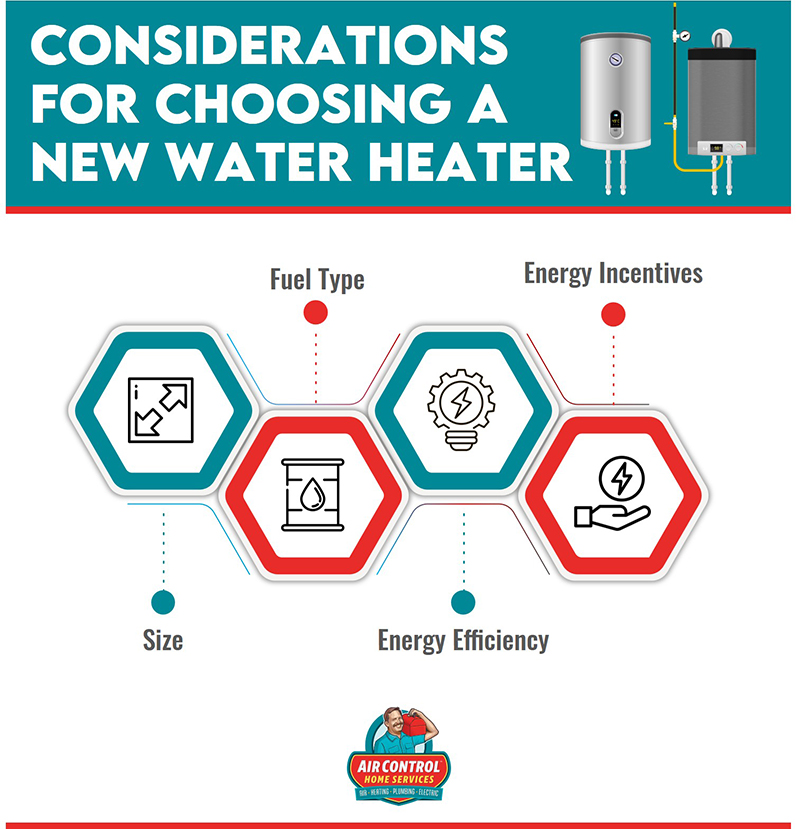
Size

The size or capacity of a water heater determines how much hot water it can provide you within a given time frame. This is an important factor on a number of fronts. If your water heater is too small, you’ll either run out of hot water or experience low hot water pressure. If your water heater is too big, you’ll spend unnecessarily up front and will be unlikely to recoup that expense.

With certain configurations, such as tank water heaters, you’ll be spending more each day you use the system. This is why we strongly encourage involving a professional installer early in the process. Our plumber can help you size your system, stay within your budget, and get good overall value.

Fuel Type

choosing new water heaterThere are electric water heaters and fuel water heaters that burn either gas or oil. Traditionally, electric water heaters are cheaper initially but more expensive in the end. Fuel-burning water heaters are more expensive initially but cheaper in the end. There are some exceptions to this rule, which we’ll discuss in upcoming sections.

Electric systems are generally cleaner. Fuel-burning systems combust gases to heat water. As a byproduct, they create dangerous gases that the system needs to vent safely. This makes it imperative to have gas and oil water heaters serviced each year. You must also have carbon monoxide (CO) detectors that require regular testing and replacement. If you have natural gas access, it’s typically the best option. If not, you’ll generally need to go with propane, which you’ll store in a tank. Oil-burning water heaters aren’t common in the region.

Energy Efficiency

The more efficient a water heater is, the less power or fuel it’ll use and the cheaper it’ll be to run. There are two ratings to consider: Uniform Energy Factor (UEF) and First Hour Rating (FHR). UEF indicates how efficient a water heater is overall. You can use it to compare one water heater to another. The rating is most useful when comparing like models, such as comparing a natural gas water heater to another natural gas water heater. FHR indicates how much hot water a system can produce during the first hour of use. This is helpful for distinguishing between two highly efficient water heating systems.

Energy Incentives

Higher-efficiency water heaters tend to cost more because they require additional and more expensive components. There’s a trade-off between saving more over the life of the equipment and spending more up front. If you can save more long term than you spend initially, it’s worthwhile. Of course, that doesn’t make it easier to budget. To help with that, there are energy incentives available.

ENERGY STAR is an Environmental Protection Agency program through which it certifies water heaters and other appliances for efficiency. There are often ENERGY STAR rebates available through manufacturers, utility companies, state and local governments, and other groups. There are also federal tax credits available, and those generally require the ENERGY STAR label, too.

Water Heater Types

There are different water heater configurations available, and those choices add context to the topics discussed above. The three core options are:

  • Storage water heaters
  • Instantaneous water heaters
  • Heat pump water heaters

Storage Water Heaters

Storage or tank water heaters are the traditional options. Modern electric tank water heaters are cheaper and rather efficient. Still, gas-burning water heaters are more cost-effective long term. These systems store and heat water in a tank. It’s crucial to get the sizing of the tank right. If the tank is undersized, you’ll run out of hot water and be out until the system can heat more. Oversizing is an option, but it isn’t practical from a financial sense. Storage water heaters are inherently inefficient in that they have to spend energy to keep their water supply heated.

Noncondensing vs. Condensing

Traditional gas storage water heaters are noncondensing. One of the other inefficiencies of this design is that a system loses heat energy in the gases it vents outside. Condensing units achieve higher efficiency by limiting this loss. They have a second heat exchanger. The system uses that additional heat exchanger to extract heat energy from the exhaust. It can then use that energy to help keep the water in the tank heated and thereby use less fuel.

Instantaneous Water Heaters

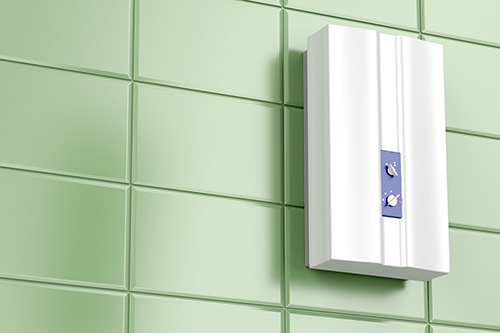
An instantaneous water heater doesn’t store hot water. Instead, it heats your water supply as you request it. The industry calls these on-demand and tankless water heaters as well. The big advantage here is that these systems provide a virtually limitless supply of hot water. Sizing them is a bit different.

You need to choose the overall flow rate in gallons per minute that meets your peak demand. One downside in larger homes is that it can be more practical to have two or more water heaters. Another advantage of this approach is that you can oversize them. If you want additional flow rate for the holidays, for instance, it’ll cost you more up front but not on a daily basis.

You have the option of electric, natural gas, propane, and fuel oil. There are instances where an electric tankless water heater is more cost-effective long term. One example is in a smaller home that has relatively low hot water demands.

Noncondensing vs. Condensing

This is similar as discussed earlier. The main difference is that the system uses the auxiliary energy to heat the water on demand.

Heat Pump Water Heaters

Heat pump water heaters are even more efficient than instantaneous water heaters. They’re actually a type of electric storage water heater, but there are major differences in how they work. Traditional electric water heaters use a heating element to heat the water directly. Heat pump water heaters use a heat pump to exchange heat energy from outside air to the water inside the tank. This approach is significantly more efficient.

Hybrid

Hybrid heat pump water heaters have a heat pump and a heating element. They use the heat pump most of the time. During peak demand, they switch over to the heating element for faster heating of the water supply.

Don’t miss out on our latest deals! Check out our specials and save big on your next service.

Would You Like to Install a New Water Heater in Arizona?

Air Control Home Services serves Arizona homeowners out of our Bullhead City, Kingman, and Lake Havasu City locations. Our plumbers install and service all manner of water heating systems. We clean drains, pipe and repipe gas, water, and sewer lines, and provide sewer services. Count on our plumbers to install kitchen and bathroom fixtures and water softening and filtration systems.

Our HVAC technicians install and service furnaces, heat pumps, air conditioners, ductless mini-splits, and smart thermostats. We install air purifiers and repair, clean, and seal ductwork. Our electricians perform whole-home rewiring and upgrade electrical panels. We also install whole-house surge protection and indoor and outdoor lighting. If you’d like to learn more about our plumbing services or schedule an appointment, call us today, or contact us online.


leaking water heater

What’s the Cost to Replace a Water Heater in Lake Havasu City?

The cost to replace a water heater in Lake Havasu City ranges from $2,000 to $7,600. However, it largely depends on whether you choose a tank or tankless water heating system. In general, tankless water heaters cost more to install.

If you’re in the market for a new water heater, the cost is probably a big concern. So, to help take some mystery out of the equation and help you narrow down the right system for your needs, in this article, we’ll explore the key cost factors involved in a water heater replacement:
  • Tank or Tankless
  • Size & Capacity
  • Energy Efficiency
  • Location & Accessibility
  • Gas Vs. Electric
  • The Plumber You Hire

While it may be tempting to opt for the most affordable option upfront, it’s crucial to weigh the long-term benefits of energy efficiency and reliability. Investing in a quality water heater and professional installation can save you money in the long run by reducing energy consumption and minimizing the likelihood of frequent repairs.

Need help choosing the right water heater for your home? Call Air Control Home Services.

We’re proud to be Lake Havasu’s go-to plumbing company, with over 3,000 water heater installations completed each year. Our licensed and highly-trained plumbers install both tank and tankless water heaters, and we can even help you with financing and sourcing rebates. For proven 5-star service backed by 100% satisfaction guaranteed, call us at 928-361-9902 or click below to request an estimate online today.

Schedule estimate

Tank or Tankless

The type of water heater you choose significantly impacts the overall cost.

Tank Water Heaters: $2,000-$5,700

Tank water heaters store and heat a large volume of water in a tank. The initial purchase cost is generally lower than tankless units, making them an attractive option for homeowners on a budget. The installation process is also fairly straightforward, simply involving the connection to existing plumbing and gas or electrical lines. Compared to tankless water heaters, the labor costs tend to be much less.

tankless water heater

The main drawback of storage tank water heaters is standby heat loss. As the water in the tank is constantly kept hot, energy is expended even when hot water is not actively in use. This inefficiency can contribute to higher operational costs over time. Additionally, tank water heaters typically have a lifespan of 10-15 years. While routine maintenance can extend their longevity, they generally require replacement sooner than tankless units.

Tankless Water Heaters: $6,800- $7,600

Tankless water heaters, also known as “on-demand” or instantaneous water heaters, have gained popularity for their energy efficiency and modern, space-saving design. The key feature of tankless systems is their ability to heat water only when needed, eliminating standby heat loss, which can save you on energy bills.

Tankless water heaters typically boast a longer lifespan, around 20 years or more, with proper maintenance. This extended lifespan contributes to a better return on investment over time.

That said, the upfront cost of tankless water heaters is generally more. This cost includes the unit itself, installation complexities, and any necessary modifications, such as upgrading gas lines or electrical systems.

Size & Capacity

The larger the tank or flow rate needed, the more your water heater replacement will cost.

When choosing a tank water heater, larger families generally benefit from a higher-gallon tank to meet increased hot water demands, especially during peak usage times like mornings and evenings when simultaneous usage of showers, dishwashers, and laundry machines influence the required capacity. Although it may be tempting to choose a smaller, less expensive unit, you don’t want your household to run out of hot water, so
it’s important to size your tank water heater correctly.

For tankless water heaters, sizing involves considering the “flow rate,” or how much hot water flows out of your taps at a time. This is measured in gallons per minute (GPM). In general, the higher the flow rate, the more the unit will cost. Additionally, larger homes or homes with multiple bathrooms may need more than one tankless unit to meet the hot water demands efficiently.


Energy Efficiency

Water heaters come with different efficiency ratings, often represented by the Energy Factor (EF) for conventional tank models and the Uniform Energy Factor (UEF) for tankless units. While models with a higher EF or UEF rating may have a slightly higher upfront cost, they generally lead to significant energy savings over the long term.

That said, when it comes to energy efficiency, it’s often the size that matters most. Oversized water heaters (whether tank or tankless) may lead to unnecessary energy consumption and increased operational costs. Conversely, undersized units may struggle to meet peak demand, resulting in discomfort and potential wear and tear from overworking. For this reason, it’s important to consult with a professional plumber to
determine the optimal size and capacity for your specific needs.


Location & Accessibility

The physical location where the water heater will be installed can impact installation costs.
    • Venting Requirements:

Proper venting is crucial for gas water heaters to ensure safe operation. Venting may involve additional materials and labor costs, especially if the installation site requires modifications.

    • Plumbing Connections:

The complexity of connecting the water heater to existing plumbing systems can influence installation costs. Upgrading or modifying plumbing may be necessary, particularly when switching from a tank to a tankless unit.

    • Space Considerations:

Limited space may necessitate creative solutions or additional modifications, impacting labor costs. Tankless water heaters, for instance, require less space but may require additional electrical work.

Gas Vs. Electric

The type of fuel your water heater uses can significantly impact installation costs. Gas
water heater installations often require upgrading gas lines and proper venting, contributing to a higher upfront cost. On the other hand, electric water heaters generally have a more straightforward installation process, resulting in lower upfront expenses.

That said, it’s important to factor in ongoing energy consumption. For example, natural gas prices have been on the rise here in Lake Havasu City, so depending on how much you pay for gas and electricity in your area, you may choose one route over the other.

The Plumber You Hire

While some homeowners may opt for DIY installations to save money, hiring a licensed and experienced professional is crucial for a successful and code-compliant installation.

Moreover, it’s worthwhile to hire a licensed and experienced plumber, even if they charge higher rates than others. Seasoned professionals bring a wealth of expertise, ensuring that the installation is executed flawlessly and in compliance with local codes. This reduces the risk of future problems down the road, so hiring a true professional is a wise decision if you’re looking for a safe and trouble-free water heater installation.

Other Cost Factors

    • Brand:

Well-known brands often come with a higher price tag but may offer better
quality and reliability. Investing in a reputable brand can reduce the likelihood of frequent repairs and replacements.

    • Warranty Coverage:

Higher-quality water heaters often come with longer warranty periods. Understanding the warranty terms and conditions is crucial for potential future repairs or replacements.

    • Maintenance Needs:

Regular maintenance can prolong the lifespan of the water heater and ensure optimal performance. Factor in any maintenance requirements, such as flushing the tank or checking the sacrificial anode rod, when evaluating the overall cost.

Want a water heater replacement estimate? Call Air Control Home Services today!

We offer a variety of tank and tankless water heater options to suit your budget and preferences, ensuring you get the perfect water heating solution for your home. Plus, if you need a tank water heater, we can likely install it on the same day as your estimate.

Call Air Control’s licensed and highly trained plumbers today at 928-361-9902 or click below to request an estimate online. We’re proud to be Lake Havasu’s 5-star rated plumbing company, treating customers like family since 1990!

Schedule Estimate

Air Control Home Services

Book Online

Book your service in less than a minute.