Get flexible financing and instant approvals for urgent home repairs—apply online today.

Tag: HVAC Tips

Smart Thermostats in Lake Hazasu City, AZ

Are Smart Thermostats Worth the Investment?

Standard thermostats are no longer the most popular choice for temperature control in modern homes. Smart, programmable, and Wi-Fi thermostats make it easier for homeowners to regulate indoor temperatures, save money, and protect their heating and cooling equipment. Of the three, smart thermostats offer the greatest flexibility and the best financial returns. If you need a new thermostat in Lake Havasu City, AZ, a smart thermostat could be well worth the cost.

What Are Smart Thermostats?

Smart thermostats are advanced learning devices. Once installed, they begin collecting information about users’ schedules, habits, and temperature preferences. They leverage this data to refine their performance and optimize both energy savings and home comfort.

Although you can program a smart thermostat to make scheduled temperature changes, it will become increasingly able to adjust itself. This way, if everyone leaves your home in a rush, your smart thermostat can adjust HVAC performance to reflect real-time changes in occupancy. These devices often are equipped with motion sensors. Some also use mobile phone location data and passive infrared (PIR) technology to accurately determine residents’ comings and goings.

Automate Temperature Changes

According to the U.S. Department of Energy (DOE), adjusting thermostat settings by 7 to 10 degrees before going to bed or leaving the home could decrease heating and cooling costs by 10% annually. With standard thermostats, homeowners must remember to make these adjustments manually. You can program a smart thermostat to make multiple temperature changes throughout the day according to your work and sleep schedules. This eliminates human error and allows consumers to make the most of these potential savings.

Enjoy Remote Access

Smart thermostats are Wi-Fi connected. These devices come with branded mobile apps that consumers can download to their smartphones, tablets, smartwatches, or other Wi-Fi-connected devices. With a smart thermostat, you can monitor your home’s temperature and HVAC performance from any location with an active connection to the internet.

Remote access makes it easy to make real-time temperature changes from work or while on vacation. If you’re away from home and someone increases your thermostat very high or low, you can make as-needed adjustments right away.

It’s even possible to set your smart thermostat to send alerts when residents make unauthorized temperature changes. Best of all, homeowners can establish authorized users. This way, teenagers and small children can’t tamper with thermostat settings without permission.

Track HVAC Performance

Smart thermostats do far more than optimize temperature control and provide remote access. They also track HVAC system performance. If you’re at work and your furnace, heat pump, or air conditioner starts short-cycling, overheating, or intermittently shutting off, you’ll find out right away. You can act quickly to rectify the problem.

Smart thermostats can send real-time alerts for:

  • Changes in airflow
  • Spikes in energy use
  • Indoor air quality (IAQ) issues
  • Clogged filters
  • Worn components

In many cases, these alerts also prove helpful for HVAC technicians. When HVAC systems break down, technicians can incorporate the data provided by smart thermostat alerts into their diagnostic processes.

Catch and Correct Problems Before They Escalate

Another way in which smart thermostats pay for themselves is by helping homeowners identify HVAC performance issues early on. With a smart thermostat, you can prevent a small problem like a blocked air filter or a dirty evaporator coil from affecting other functions and components. With real-time alerts and timely interventions, you can limit your repair costs and protect the lifespan of your heating and cooling equipment.

Get Helpful Energy Insights

Smart thermostats additionally offer energy consumption tracking. With a smart thermostat, you can analyze changes in your energy use from month to month and year to year. Detailed energy consumption reports help homeowners adjust their thermostat settings for increased energy savings. Smart thermostats also offer insight into age-related decreases in HVAC efficiency. With energy tracking, you can make informed decisions about when to replace older heaters, heat pumps, and ACs.

HVAC Maintenance Alerts

Staying on top of essential HVAC maintenance is easy with a smart thermostat. These devices send out regular HVAC maintenance alerts and filter change reminders. These alerts are especially helpful for homeowners with busy schedules and lots of home equipment to maintain. You’ll get notifications when it’s time for heater and AC tune-ups and when collected filter debris affects airflow.

Smart Home System Integration

Smart thermostats can integrate with other smart home features. This allows for adaptive temperature control, enhanced energy savings, and greater ease of use and maintenance. With smart home integration, you can track and control all your smart home technologies remotely and from a single device. You’ll also have greater insight into overall energy use and an enhanced ability to curb energy consumption.

Optimize HVAC Zoning

If you have a zoned HVAC system, smart thermostats with geo-fencing can optimize its performance. Geofencing establishes virtual boundaries around and throughout buildings. As people move about within these perimeters or leave, smart thermostats adjust air delivery accordingly. With smart thermostats and geofencing, your zoned HVAC system can provide temperature and humidity control in occupied areas only.

Smart Thermostats Can Pay for Themselves

As per the DOE, even entry-level smart thermostats can reduce home energy bills by up to 8% annually. For most households, this results in savings of at least $50 each year. Although estimates vary, mid-level and high-end thermostats could reduce home energy bills by as much as 20% annually, especially when paired with other smart home devices.

It’s estimated that most smart thermostats pay for themselves within just one to two years of installation. The average lifespan of smart thermostats is 7 to 10 years. Thus, you could enjoy significant returns on your investment for at least five years.

Is a Smart Thermostat Right for You?

While there are many benefits that smart thermostats offer, these devices aren’t for every home. If you work at home and spend a lot of time indoors, you may get sufficient support at a lesser cost from a Wi-Fi thermostat, a standard thermostat, or a programmable model.

Dealing With Erratic Schedules

Programmable thermostats work well for people with relatively static schedules. Although you can set a programmable thermostat to make multiple temperature changes throughout the day, this device won’t react to sudden departures. With built-in motion detection and other technologies for tracking users’ movements, smart thermostats are best for busy households and people constantly on the go.

Data Tracking

Some consumers are leery of the amount of information collection and data tracking that smart thermostats entail. However, capabilities such as user tracking and location detection are critical for optimizing HVAC performance and energy savings. If you’re comfortable with smart home technologies and want enhanced comfort and convenience, a smart thermostat is right for you.

Upgrade Your Thermostat Today

Air Control Home Services proudly serves Lake Havasu City and the surrounding communities. We offer thermostat installation, maintenance, and repair services. Locals can turn to us for cutting-edge smart thermostats at affordable prices. We can also help you better understand home efficiency upgrades and rebates that go along with them.

As a family-owned and -operated HVAC company, we’ve been a top choice for HVAC service since 1990. To experience the benefits of smart thermostats firsthand, contact Air Control Home Services in Lake Havasu City today.

AC Maintenance in Lake Havasu City, AZ

The Case for Regular Duct Cleaning in Arizona Homes

Arizona homes face a lot of unique challenges when it comes to HVAC systems. Dust storms and seasonal pollen create the perfect conditions for indoor air contamination. While modern HVAC systems filter out a portion of airborne particles, dust, allergens, and debris can still accumulate in your ductwork over time. Regular duct cleaning helps to improve your indoor air quality.

How Arizona’s Environment Impacts Indoor Air Quality

The Arizona climate is notorious for its dust, pollen, and fluctuating temperatures. Homes in this state often experience heavy dust accumulation during the monsoon season or when nearby construction projects kick up debris. Desert winds carry fine particles that can infiltrate your home through windows, doors, and your HVAC system.

As your ducts accumulate dust and other debris, the air your family breathes can become contaminated. Allergens circulate throughout your living space, aggravating existing respiratory conditions and triggering allergy symptoms. Regular duct cleaning is important because it removes trapped particles before they spread into your home.

Benefits of Regular Duct Cleaning

Maintaining clean air ducts directly impacts the health and comfort of your household. Let’s explore some of the benefits that you can reap from regular duct cleaning.

Improved Indoor Air Quality

Over time, allergens accumulate in your ductwork. When your HVAC system operates, it circulates these particles throughout your living space. This can trigger allergy or asthma symptoms in sensitive household members. Regular duct cleaning removes irritants so that you can breathe easier. In Arizona, dust storms and seasonal pollen are common, so clean ducts are a necessary step to help you maintain a healthy living environment in your home.

Enhanced HVAC Efficiency and Energy Savings

Debris buildup restricts airflow, forcing your HVAC system to work harder to keep the temperature where you want it. This extra effort can increase energy consumption and utility costs while accelerating wear and tear on your equipment. By keeping ducts clean, you can help your system to operate more efficiently, consuming less energy. You may be able to extend the lifespan of your HVAC components, saving you money over time.

Reduction of Odors

Some things, like smoke and cooking residues, settle in the ducts in your system and linger there. When they do, unpleasant odors are present whenever your system runs. Duct cleaning removes particles that cause these smells, leaving your home smelling fresher. Additionally, UV light upgrades neutralize bacteria, further improving air freshness inside your home.

Mold Prevention and Moisture Control

High humidity during Arizona’s monsoon season creates ideal conditions for mold to grow inside your ductwork. Mold spores that circulate in the air can cause allergic reactions and damage HVAC components. Regular duct cleaning combined with humidity management helps prevent mold from becoming a problem.

Enhanced Comfort Throughout the Home

Clogged ducts often lead to uneven heating or cooling in your living space. Clean ducts help to restore airflow and maintain constant temperatures in your home. Your heating and cooling system will be able to respond to thermostat settings, providing you with greater comfort during seasonal temperature swings.

Reduced Exposure to Indoor Pollutants

Most likely, you can find volatile organic compounds (VOCs) from cleaning products, paints, and building materials in your home. Dust and debris in ducts can trap these pollutants, prolonging exposure in your living space. By removing buildup from your ductwork, you can minimize the circulation of these pollutants, improving the overall air quality for children, seniors, and anyone with respiratory sensitivities.

Supports a Cleaner HVAC System Overall

Duct cleaning also protects your HVAC system. Dust, debris, and buildup in ductwork can reach your air handler, coils, and blower motor, decreasing efficiency and increasing the risk of breakdowns. Clean ducts help your system operate smoothly, reducing maintenance costs and unexpected repairs.

When to Schedule Duct Cleaning

We recommend having your ducts cleaned every three to five years, but Arizona’s climate may require you to clean them more often. Homes in particularly dusty areas or those affected by construction may benefit from annual inspections and cleaning. Additionally, if you notice increased allergy symptoms, unusual odors, or reduced airflow, it’s time to schedule duct cleaning.

What to Expect During a Professional Duct Cleaning

The professional duct cleaning we offer at Air Control Home Services starts with an inspection of your system. We will look at the extent of dust and debris present there. We use specialized tools, including high-powered vacuums and rotary brushes, to remove contaminants from all ductwork components, including supply and return vents, air handlers, and registers.

The process will minimize dust escaping into your living space. You can consider optional upgrades, such as sanitizing treatments or UV light installation, to further improve indoor air quality in your home.

Maintaining Clean Ducts Between Professional Services

Even after professional cleaning, you can take steps to prolong the cleanliness of your ducts. Regularly replacing HVAC filters, vacuuming and dusting your home, and ensuring proper sealing of windows and doors can reduce the amount of dust and debris entering your system. Maintaining a clean environment helps your ducts stay cleaner longer, extending the benefits of professional cleaning.

Change HVAC Filters Regularly

Replacing your air filters on a regular basis — generally every one to three months — prevents dust and allergens from entering your system. High-efficiency filters can capture smaller particles and extend the time between professional cleanings.

Keep Your Home Dust-Free

Vacuuming with a HEPA filter vacuum, dusting surfaces, and cleaning floors reduce the amount of debris that could enter your ducts. When your home is free of dust, the ducts in your system also tend to stay clean.

Seal Windows, Doors, and Ductwork

Proper sealing prevents dust, pollen, and other airborne particles from entering your home. Sealing gaps in ductwork allows your HVAC system to circulate cleaner air.

Monitor Humidity Levels

High humidity can lead to mold growth in your ducts. Keeping humidity within recommended levels with a dehumidifier will reduce moisture buildup, further protecting your ductwork and indoor air quality.

Regular Inspections

Periodically inspect vents and duct openings for visible dust. Address small issues before they accumulate and require professional intervention.

Choosing the Right Professional

At Air Control Home Services, our team has the experience to provide duct cleaning and air quality services to foster comfortable living spaces in Arizona homes. We identify issues in your system and quickly remove contaminants. We also recommend upgrades to improve your home’s air quality. We make sure to clean your ductwork effectively without damaging delicate components in your system or spreading dust throughout your home.

Breathe Easier With Our HVAC Team

Arizona’s climate presents unique challenges for indoor air quality. Dust and pollen can stress HVAC systems and compromise the air you breathe. Regular duct cleaning will improve your system’s efficiency and minimize the number of allergens in your home. Since 1990, we have served the Lake Havasu City area’s heating and cooling needs.

Call us at Air Control Home Services today to schedule duct cleaning so that you can experience the benefits of cleaner, healthier indoor air.

Smart Thermostats in Lake Havasu City, AZ

Seasonal Energy Saving Tips Every Arizona Homeowner Should Know

Living in Lake Havasu City, AZ means plenty of sunshine and scorching temperatures that can push your cooling system to work harder this summer. With energy costs climbing, it’s no surprise you want to look for ways to cut utility bills without sacrificing comfort. You don’t have to choose between comfort and savings.

In this guide, our heating and cooling services team will discuss energy-saving tips to maximize the performance of your system without going over budget.

Understand Arizona’s Unique Climate Challenges

Before diving into specific tips, it’s helpful to understand how Lake Havasu City’s climate affects your energy usage. We enjoy mild winters, but our summers are long and brutally hot, with highs often reaching 110°F or higher. That means your air conditioner works harder and runs longer than it would in cooler climates.

At the same time, desert nights can get surprisingly cool, especially in winter. Learning to work with the natural environment instead of against it can save you money and keep your HVAC system in better shape for the long run.

Keep Up with Routine HVAC Maintenance

Nothing boosts efficiency like regular HVAC maintenance. Schedule professional tune-ups at least once a year — twice if you want optimal performance during peak summer heat. During a tune-up, we will check refrigerant levels, inspect electrical connections, test the thermostat, and clean critical components in your HVAC system. When your system runs smoothly, it uses less energy to maintain your desired temperature.

Frequently Replace Air Filters

When your air filters are dirty, they restrict the airflow in your home. This makes your system work harder than necessary. In our dusty desert environment, changing your filter is even more critical. Check your filters monthly, especially during the hottest months when your cooling system runs all the time. Plan to change them at least every one to two months. If you have furry pets or allergies, do it more frequently. High-quality filters also improve indoor air quality, allowing your family to breathe more easily.

Seal Leaks Around Windows and Doors

Tiny gaps around your windows and doors let in hot air during the summer and cool air during the winter. This forces your HVAC system to work harder to maintain your desired indoor temperature. Check the windows and doors in your home for drafts. Use weather stripping to seal any leaks that you find. You’ll notice more stable indoor temperatures and lower utility bills when the air stays where you want it.

Upgrade to a Programmable or a Smart Thermostat

One of the most effective ways to reduce your energy bill in Lake Havasu City is to install a programmable or smart thermostat. These devices let you adjust your home’s temperature when you’re away automatically, so you’re not cooling or heating an empty house. You can also schedule the temperature to be lower in the bedrooms while you are sleeping.

Smart thermostats go further by learning your habits and suggesting ways to save energy based on your daily schedule. It allows you to zone your living space, making it easy to keep a consistent temperature in rooms that you use frequently while minimizing energy use in unused areas. Some even let you control your settings from your phone, so you can make changes to your settings while you’re away from home.

Insulate and Shade Your Home

When you consider insulating your home, you may think that areas with colder climates require it more. However, good insulation is just as important in hot climates. Proper insulation helps keep cool air inside during the hot months and warm air inside during the cooler months.

Heavy drapes or blackout curtains can also be a significant help in cooling your home. They help block heat from the sun, especially on south- and west-facing windows. Exterior shading, like awnings or shade screens, can also keep your house naturally cooler.

Maintain Your Ductwork

Leaky ducts can waste a surprising amount of energy. If your ducts run through your attic, crawl space, or garage, leaks or poor insulation mean that cool air escapes your home before it ever reaches your living spaces. Inspect your ductwork every few years to ensure it is in good condition. Sealing leaks improves the efficiency of your system, providing you with lower monthly energy bills and more consistent temperatures.

Utilize Natural Ventilation Options

Make the most of the desert breeze during the early morning or late evening hours. Open windows bring in fresh air and give your air conditioner a short break. However, don’t keep the windows open once temperatures rise because you won’t want hot air creeping in.

Use Energy Efficent Lighting and Appliances

Incandescent bulbs and older appliances waste energy and generate additional heat that your AC must counteract. Switch to LED bulbs in your home to use less electricity and generate less heat. When it’s time to replace appliances like your refrigerator, dishwasher, or water heater, look for ENERGY STAR-certified models that have a more efficient design. They use less energy and can help you save money throughout the year.

Don’t Forget to Schedule Seasonal Maintenance

Each season brings new demands for your HVAC system. Before summer arrives, schedule a maintenance session for your cooling system. Before winter, have your heating system checked, even if you rarely use it. Minor issues are less costly to fix when caught early. A little preventive care goes a long way toward avoiding emergency breakdowns.

Adopting Good Habits to Use Daily

Along with upgrades and seasonal prep, a few simple daily habits can add up to real savings. Close blinds during peak sun hours to block out heat. Blocking direct sunlight helps keep indoor temperatures naturally cooler.

Avoid using appliances that produce a lot of heat during the hottest parts of the day. Choose meals that don’t require long oven use. Try grilling outside or using small appliances, like air fryers, slow cookers, or microwaves, to reduce the heat in your kitchen.

Set your thermostat to the highest temperature that keeps you comfortable. Each degree you raise your thermostat setting can save you around 3% on cooling costs. Try keeping the thermostat around 78°F to strike the right balance between comfort and savings.

Take Control of Your Energy Bills

Small changes and routine care can significantly impact your year-round comfort and energy costs. When you stay on top of maintenance, add a smart thermostat, or fix leaks, you’ll enjoy greater comfort and energy savings every month. We’ve been serving Lake Havasu City since 1990, so we know your comfort needs. We will also make sure your system runs at its best and your energy bills stay under control.

If you’re ready to boost your home’s efficiency, reach out to Air Control Home Services today!

Heat pump installation in Lake Havasu City, AZ

Why Heat Pumps Are a Smart Choice

If you own a home in Lake Havasu City, AZ, you should already be aware of the HVAC system’s importance. And in this area, a heat pump is a nearly perfect HVAC solution. With at least four months of the year experiencing triple-digit temperatures, their cooling capabilities make them a worthwhile investment. When you further consider that heat pumps are an ideal heating solution in mild winter climates, the value becomes clear. Here’s an overview of heat pumps and why they’re so perfect for local homes.

What Is a Heat Pump?

As its name suggests, a heat pump is a device capable of moving heat from one place to another. In an HVAC context, a heat pump is a system that operates bidirectionally, serving as a heating and cooling solution. Heat pumps are neither new nor particularly uncommon. The technology that powers heat pumps dates to 1855, and homes have relied on heat pumps since the 1960s. Odds are you already own at least two of them. One is your home’s refrigerator. It collects heat from inside its sealed compartment and expels it into the air in your kitchen. The other heat pump you likely own is your existing AC. It gathers the heat inside your home and carries it outdoors to release it.

How Does a Heat Pump Work?

Heat pumps use fundamental scientific principles to operate. The most important one is that heat energy spontaneously moves from hotter to colder substances. Heat pumps, like air conditioners, exploit that using the refrigeration cycle. It capitalizes on the relationship between the pressure, phase, and temperature of a refrigerant. Generally, when the pressure of a gaseous refrigerant increases, its temperature rises. Conversely, reducing the pressure on a gaseous or liquid refrigerant lowers its temperature.

In cooling mode, the refrigeration cycle of a heat pump begins by passing liquid refrigerant through an expansion valve. That lowers its pressure and temperature. Then, the liquid refrigerant travels to a coil in the heat pump’s indoor unit. There, a large blower fan pushes warm air from your home over the coil. That allows the refrigerant to extract heat from the air, cooling it down. It becomes the cold air that blows out of your home’s vents.

When the refrigerant absorbs enough heat energy, it boils into a warm vapor. Next, it travels back outside and through the heat pump’s compressor. This raises the vapor’s temperature and pressure until it’s far hotter than the outdoor air. From there, the hot refrigerant passes through an outdoor coil while a large fan blows outdoor air over it. That forces the refrigerant to release the heat and condense back into a cool liquid. At that point, the cycle begins again.

In heating mode, the refrigeration cycle operates the same way but in reverse. Heat pumps accomplish that using a reversing valve that sends refrigerant through the system in the opposite direction. That means the heat pump gathers heat energy from the outdoor air and transfers it into your home’s air. If you’re wondering how a heat pump collects heat from cold outdoor air, there’s a simple explanation. Even frigid air holds heat energy; it’s just that the human body doesn’t feel it. That’s due to our relatively high body temperature. Heat pumps, however, use refrigerants that can be as cold as -15 degrees Fahrenheit. They can readily extract heat from the outdoor air, which is far warmer than that.

The Advantages of Heat Pumps

The most significant advantage offered by heat pumps is their high energy efficiency. In cooling mode, heat pumps typically operate at approximately 350% efficiency. That’s comparable to a high-efficiency central AC. In heating mode, they retain that extraordinary efficiency as long as outdoor temperatures stay above 40 degrees. By comparison, the highest-efficiency gas furnace can only reach about 98.7% efficiency. In other words, heat pumps are the most efficient year-round HVAC solution you can get.

A heat pump also has some significant environmental benefits. They don’t burn any fuel and, therefore, have no direct emissions. That gives heat pumps one of the lowest carbon footprints of any HVAC solution currently on the market. Since they’re all-electric, you can also pair a heat pump with a renewable energy source to further minimize its environmental impact. For example, you can install a rooftop solar power system, which comes with the added benefit of reducing your heat pump’s operating cost. Or, you can choose an all-renewable electricity supplier for your home.

Heat pumps also qualify for significant financial incentives. One of the biggest benefits is a federal tax credit worth up to 30% of your system’s cost, capped at $2,000. Homeowners with low to moderate household incomes can qualify for point-of-sale rebates worth up to $14,000 on qualifying heat pumps. Between the two, a new heat pump installation can cost the same or less than any other HVAC solution.

If your home already has a ducted HVAC system, you should know that installing a heat pump is easy. Ducted heat pumps share a similar form factor to conventional HVAC systems. They include a single outdoor unit and an indoor unit, both of the same shape and size as a combination AC and furnace. And if your home lacks ductwork, you can still install a heat pump. In that case, you could choose a ductless mini-split heat pump. They include a single outdoor unit powering multiple wall-mounted air handlers.

Do Heat Pumps Have Disadvantages?

Heat pumps have few disadvantages and even fewer when used in Lake Havasu City. Their biggest drawback is a loss of efficiency at extremely low temperatures. At temperatures below approximately 20 degrees, a heat pump becomes less efficient than a typical gas furnace. In this part of the country, we’ve never experienced weather that cold. The record low in our area stands at 25 degrees. Therefore, low-temperature efficiency is irrelevant in this context.

The only other significant disadvantage of heat pumps is that they make your home reliant on a single system for heating and cooling. Again, since we experience so few days where you need heat here, that is largely irrelevant here. Most local homes will use their heat pump in cooling mode most of the time. The heating mode is there primarily for comfort on a handful of chilly nights each year. If you notice your heat pump isn’t working as efficiently, we can help with heat pump repair!

Your Local Heat Pump Experts

Since 1990, Air Control Home Services has offered efficient HVAC solutions in Lake Havasu City. That includes the latest models of heat pumps from Trane and Mitsubishi Electric. We’re a family-owned and operated business that’s laser-focused on customer service.

Our team of expertly trained HVAC technicians is among the best in the industry. Our Better Business Bureau accreditation and A+ rating reinforce our stellar local reputation. So does the long list of five-star reviews left by our legion of satisfied customers. So, if you’re ready for a heat pump installation in Lake Havasu City, contact Air Control Home Services today!

HVAC Insulation in Lake Havasu City, AZ

Reducing Arizona Cooling Costs Using Insulation

Cooling your Lake Havasu City, AZ, home can be expensive, especially during the heat of summer. However, there are ways to reduce your cooling costs, including the use of insulation. If your home isn’t adequately insulated, consider upgrading it.

The Role of Insulation

Arizona’s summer temperatures can rise above 100 degrees Fahrenheit. In fact, temperatures have surpassed 100 plus degrees 60 times each year for the last few years. This can lead to your cooling equipment running frequently to maintain a comfortable indoor temperature. If your home isn’t well-insulated, it can allow heat from outside to enter, potentially resulting in high energy bills. By ensuring there is a barrier between your home and the outdoors, you can reduce heat transfer and lower cooling costs. You might also call for fewer heating and AC repairs, since your systems won’t have to work as hard.

Considering R-Value

Insulation products are rated using an R-value, which represents how well they can resist the flow of heat. Insulation with a high R-value represents optimal and efficient insulation. Arizona benefits from high R-value insulation, especially during extreme heat. Keep in mind that the R-value can be impacted if there are air leaks in the areas where the insulation is located.

You can increase the R-value of your insulation by layering different products. Some products can be layered easily, such as rigid foam boards and fiberglass batting. However, products like spray foam insulation and cellulose don’t pair well, as they can experience a compression effect that can decrease R-value over time as the products settle. There may be a specific order in which products must be installed, which a professional can help you address.

If you’re planning on layering insulation to increase R-value, work closely with a knowledgeable professional. There are often local building codes that dictate what kinds of products can be used together and how they need to be installed.

Sealing Your Home

Insulation also helps close any cracks, gaps, or open spaces that allow heat to enter your home. Before having insulation installed, you can seal these spaces with products like caulk or expanding spray foam.

Addressing Hot and Cold Spots

Uneven insulation throughout your home can lead to inconsistent indoor temperatures. This results in overusing your cooling equipment to address areas that are uncomfortably warm.

Considering Insulation Location

Several key areas of the home are often under-insulated. Heat rises, so attics tend to be the main areas of homes that experience efficiency issues. Windows and doors can also be problematic, especially as they age. It’s common for gaps and cracks to form around these areas, allowing air to enter.

Wall insulation provides a strong barrier for thermal comfort and efficiency. Most homes have this insulation installed before the drywall is put up, but it can usually be added to walls later as well.

Because basements and crawl spaces are underground, they tend to be cooler than the rest of the home. However, some degree of heat can still seep through the foundation of your home if the insulation isn’t adequate.

Different Types of Insulation

Insulation comes in several varieties. Some are more suited to the warm climate of Arizona than others.

Spray Foam Insulation

Spray foam insulation provides a very tight seal against the outdoors. This airtight seal is also highly resistant to moisture and mold. It can be used in areas such as walls, attics, and ceilings, effectively filling in very small spaces. Spray foam insulation typically has a very high R-value. Open-cell spray foam is breathable and usually has an R-value between 3.5 and 4.0 per inch, while closed-cell spray foam is dense and typically has an R-value between 6.0 and 7.0 per inch.

Keep in mind that spray foam insulation can be more expensive than other insulation options. However, it is well worth the money spent considering the savings on your cooling costs. Additionally, you may be eligible for a tax credit when you upgrade your insulation using a spray foam product.

Radiant Barriers

Ideal for very hot climates, radiant barriers reflect heat away from your home instead of absorbing it. They are usually used in attics to facilitate the reflection of heat off the top of your home. Radiant barriers are often used in conjunction with other types of insulation, such as spray foam, fiberglass batting, and rigid foam boards. Professional installation is important for ensuring that a radiant barrier functions correctly. It’s important to note that radiant barriers do not have an R-value since they operate differently from other insulating products.

Fiberglass Batting

A common insulation product used in homes all over the country, fiberglass batting is made of very fine pieces of glass. These panels can be cut to fit specific spaces around your foundation, in crawl spaces, and in your attic. The R-value of fiberglass batting varies depending on the thickness of the product. For example, a 3.5-inch-thick sheet will have an R-value between 11 and 15 per inch. Thicker batting, between 8 and 12 inches, will have an R-value between 30 and 38 per inch.

Fiberglass insulation doesn’t always reduce cooling costs well since it allows air gaps to occur. Professional installation can help minimize this risk but doesn’t eliminate it entirely.

Rigid Foam

A rigid foam board insulation can be installed in basement walls, attics, and exterior walls. It has a very high R-value, which falls between 3.6 and 4.2 per inch for expanded polystyrene foam boards and 6.0 to 6.5 per inch for foam boards made from polyisocyanurate. This is the most efficient rigid foam insulation option available.

Unfortunately, rigid foam offers little flexibility during installation. It can be cut to fit certain spaces, but full access to these areas is necessary to install the insulation properly. It holds up well to moisture, resists mold, and promotes a very tight barrier.

Blown Cellulose

This eco-friendly insulation product is usually made from recycled paper products. It comes in the form of loose fill and is applied to specific areas using professional equipment. Blown cellulose insulation is ideal for hard-to-reach areas in your attic or walls. It’s also very cost-effective and provides a moderate R-value of approximately 3.2 to 3.8 per inch.

Blown cellulose insulation can settle into place over time, reducing its effectiveness. To save money in the long run, you may want to consider investing in a higher-quality product.

Reducing Your Carbon Footprint

Insulation helps lower your cooling costs, but reducing the amount of energy your home uses also reduces your carbon footprint. This action helps slow climate change by decreasing the number of greenhouse gases in the environment. Additionally, it promotes better indoor air quality by reducing pollution.

Air Control Home Services can help reduce your cooling costs in several ways. We offer routine AC maintenance that keeps your air conditioning equipment working efficiently and affordably. We even have a Comfort Club Maintenance Program to help you save money while keeping your AC and heater working at their best. Our repairs can address issues impacting cooling efficiency. Upgrading your insulation helps create an insulating barrier that keeps cool air inside. Contact Air Control Home Services in Lake Havasu today for more information about insulation and its role in reducing cooling costs.

AC repair in Lake Havasu City, AZ

How to Stay Cool While Waiting for AC Repairs in the Summer

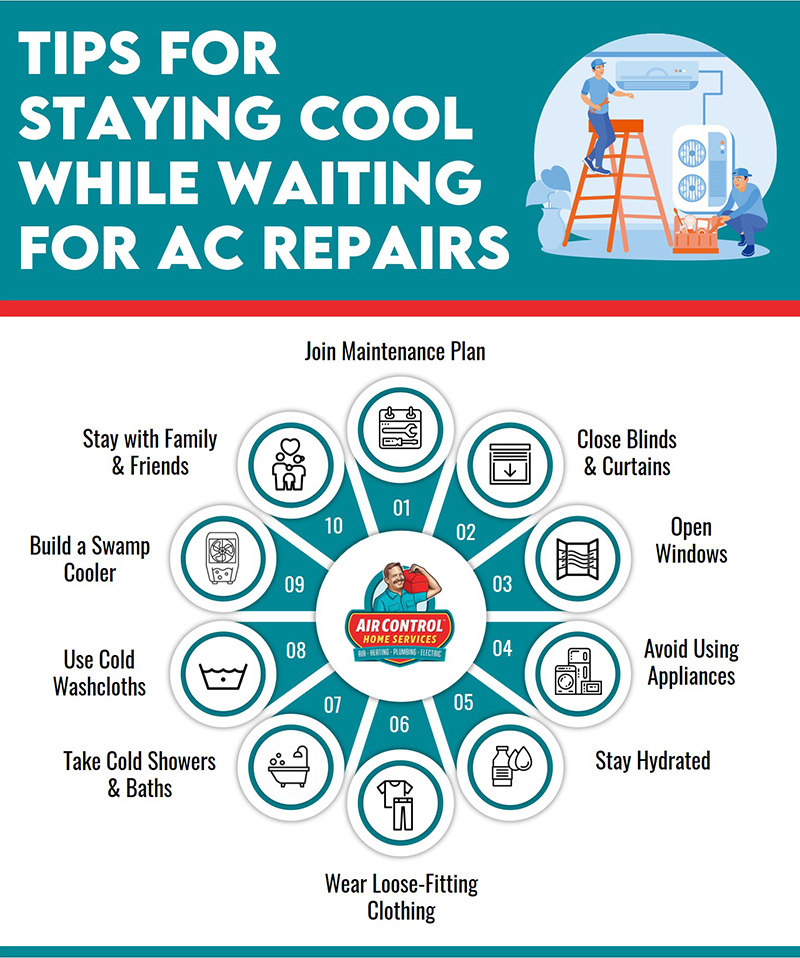
Here in Lake Havasu City, AZ, we experience several months each year with temperatures in the triple digits. Trying to survive without air conditioning can be hazardous to your health at those temperatures. However, air conditioners, like all machines, can break down. When that happens, you’ll need to find ways to stay cool while you wait for repairs. Here are 10 tips for staying cool while you wait for our HVAC team from Air Control Home Services to arrive.

Contact Us

1. Shorten Your Repair Wait Time

Anything you can do to reduce your AC’s downtime is a good idea. You should consider enrolling in our maintenance plan as soon as possible. This plan comes with priority service, no overtime fees, and access to a dedicated concierge line. Being a member means you skip to the head of the line when your AC needs repair. There won’t be a need to depend on alternate means of keeping cool longer than necessary.

2. Keep the Sun Out

Closing your home’s blinds and curtains is essential to control the temperature inside your home during the summer months. While you wait for AC repairs, you should close them before sunrise and leave them closed until sunset. If you have medium-colored curtains with white plastic backing, they can cut solar heat gain by up to 33%. When you’re stuck with no air conditioning, that’s a significant improvement.

3. Remove Heat at Night

Keeping heat out of your home during the day will help keep you cool, but expelling heat at night can also be beneficial. Open your windows to maximize ventilation when the sun goes down. Use large fans to push hot air out of your open windows overnight. If you have a multi-story home, set your exhaust fans up on the second floor. Since heat rises, you’ll exhaust more heat while drawing cooler air in through your first-floor windows.

4. Avoid Using Major Appliances

Using your home’s major appliances will significantly increase the temperature inside your home. When you’re without AC, refrain from cooking for long periods of time using your oven. Doing laundry and running your dryer can also produce heat and should be avoided. This will minimize unnecessary heat gains and help your other cooling strategies work more effectively.

5. Stay Hydrated

tips stay cool

Fortunately, our bodies have a built-in cooling mechanism that works exceptionally well. However, you need to stay hydrated if you want to support this process. When we sweat, the moisture evaporates off our skin, carrying heat with it. In dry climates like ours, the air readily absorbs your skin’s moisture, accelerating the cooling process. In extreme heat, your body can lose up to 1.5 liters of water per hour as sweat. Keep plenty of cold water on hand to rehydrate.

6. Wear Loose-Fitting Clothing

To maximize the benefit of sweating, you must keep air flowing across as much of your skin as possible. The best way to accomplish that is to wear light, loose-fitting clothing. Not only will this allow air to circulate underneath your clothes, but it will also prevent your clothing from absorbing your sweat and becoming damp. When that happens, the heat in your sweat stays trapped against your body, negating the cooling effects.

7. Take Cold Showers and Baths

Even on hot summer days, your home’s tap water should be significantly cooler than the air temperature. You can take advantage of that by taking cold showers and baths. Even if your home’s tap water is lukewarm, it should still help you cool off.

8. Use Cold Washcloths

You can also strategically use cold washcloths to stay cool while you await AC repairs. The best way to do this is to dampen as many washcloths as possible and store them in your refrigerator or freezer for a short period of time. Then, apply them to your pulse points on your neck and wrists. This will keep you cool and slow your pulse, preventing you from overheating. When your washcloths get warm, swap them with a fresh set from the refrigerator or freezer.

9. Build a Makeshift Swamp Cooler

If you expect to be without AC for more than a day or two, you could build a swamp cooler to stay cool. A swamp cooler uses evaporation to produce cool air. A small DIY version can cool the air in a small room by between 15 and 40 degrees Fahrenheit. Best of all, they’re most effective in dry climates like ours.

To build a swamp cooler, you’ll need a few items. The first is a five-gallon foam cooler. It will house the rest of the components and provide an insulated space inside. Plus, foam is easy to cut, making assembly easier. You will also need a desk fan and three, 6-inch lengths of 3-inch-diameter PVC pipe.

To assemble the cooler, cut a hole in the foam lid that’s large enough to allow the fan’s face to fit. Then, cut three equidistant 3-inch holes about 2 inches from the top edge on one of the cooler’s sides. Next, insert the PVC pipes into the three holes.

To use your swamp cooler, fill the bottom of the foam container with either cold water or ice. Then, put the lid on and place the fan in its hole. When you turn the fan on, it will push warm air straight down onto the ice. That will cause the ice to melt, evaporating its water and cooling the air in the process. The cold air then gets forced out of the three PVC tubes to cool the area around the container.

10. Arrange a Short Stay With Family or Friends

If you’re older or otherwise especially vulnerable to heat, you shouldn’t try to wait for AC repairs in your home. Instead, you should arrange to stay at a friend’s or family member’s home. Only air conditioning can keep your home sufficiently cool during the Lake Havasu City summer. While the foregoing tips might make the heat bearable, you could still suffer ill effects.

If there’s nobody nearby you can stay with, consider spending as many daylight hours as possible outside the home. Stores and malls are usually air-conditioned, and you can get through the hottest parts of the day that way. Then, you can return home at night when fans alone will keep your home at a reasonable temperature. Remember to close all your home’s blinds and curtains while you’re out.

Local Rapid AC Repair Specialists

The bottom line is that prompt AC repairs are the best way to beat the heat when your AC breaks down. Air Control Home Services is the HVAC company to depend on. We offer expert HVAC installation, repair, and maintenance. We’re a Trane Comfort Specialist and a Mitsubishi Electric Ductless Elite Pro. We’re also Better Business Bureau accredited with an A+ rating. If you need the AC in your Lake Havasu City home repaired, contact our team at Air Control Home Services today!

HVAC installation in Lake Havasu CIty, AZ

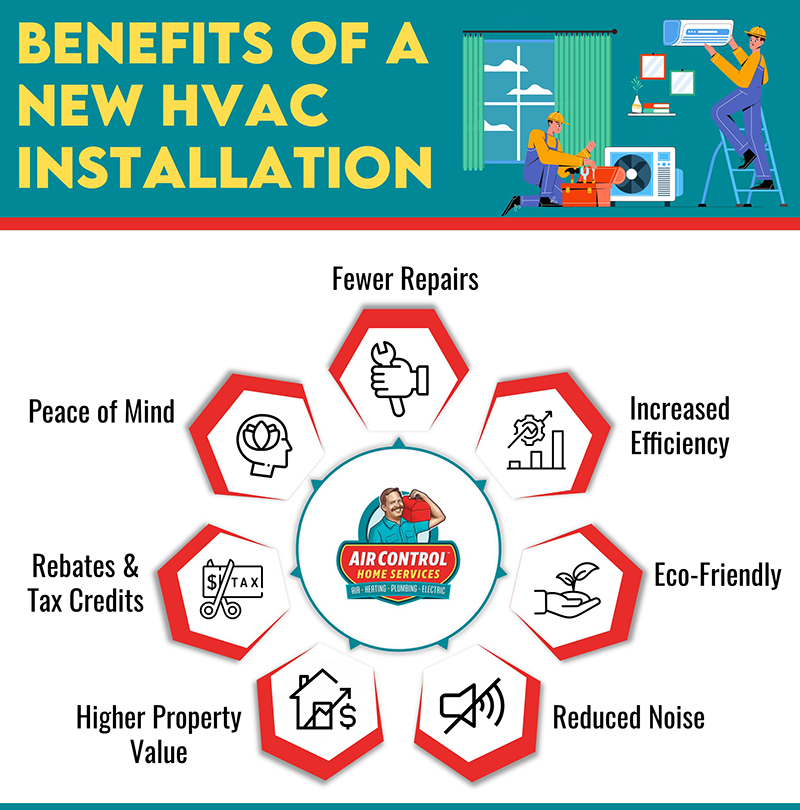
7 Benefits of a New HVAC Installation

Buying a new HVAC system in Lake Havasu City, AZ, is an investment. However, your outdated system probably costs more than you realize. Repairs and high energy bills gradually add up. New systems are reliable and efficient, relieving stress and maintaining a consistent temperature in your house. You’ll also reap the benefits of the latest technological advancements.

1. Fewer Repairs

HVAC systems typically need service at one time or another. However, outdated units break down more frequently, resulting in increasingly expensive repairs. This affects your household budget and sometimes leaves you dealing with uncomfortable temperatures. You’ll pay for the initial investment and installation of the new system, but you won’t have to worry about unexpected breakdowns. If you remember to schedule routine HVAC maintenance, you might not be faced with repairs for years.

2. Increased Efficiency

benefits new hvac installationAs time passes, HVAC system components gradually wear out. Technicians can replace broken parts, but your equipment may eventually struggle to keep up with the demand. Your system may short cycle before reaching a comfortable temperature, cool your house unevenly, or produce weak airflow.
Many homeowners adjust their indoor temperature frequently, thinking it will force the HVAC system to reach their desired setting. Unfortunately, this adds strain to a potentially already overworked system. Your energy bills rise as your equipment draws more power. Eventually, the system may shut down completely, or worse, overheat and start a fire in your home.

New HVAC systems offer maximum efficiency. With no broken or outdated parts, they’re ready to heat and cool your home for many years. They operate without strain, reducing your energy bills and environmental footprint.

Upgrading your HVAC system also gives you access to advanced technology. Modern HVAC systems have upgraded features, such as variable-speed compressors and energy-efficient settings. These features provide a system that uses less electricity than older models. Their improved insulation reduces the risk of leaks that drive down efficiency, and newer designs maximize ventilation for superior airflow.

3. Environmental Protection

Newer HVAC systems burn less fossil fuel than outdated models. Many older models also use R-22 refrigerant for air conditioning purposes, which the Environmental Protection Agency (EPA) banned in 2010 because it contributes to ozone depletion. You can still use your existing unit, but R-22 is increasingly difficult to source. Since the ban, manufacturers have switched to environmentally friendly alternatives.

4. Reduced Noise

Worn-out units tend to make rattling, clanging, or banging sounds. Modern systems are quiet, allowing you to enjoy your day without distractions. Some manufacturers specifically design their units to produce as few decibels during runtime as possible.

5. Higher Property Value

For homeowners, an upgraded HVAC system means that maintenance is manageable. New technology can provide convenience and efficiency. These factors boost your property’s value. If you’re looking to sell your home soon, a new HVAC system may be worth the investment.

6. Rebates and Tax Credits

State and federal governments often provide rebates and tax credits for homeowners who purchase energy-efficient products, including HVAC equipment. This offsets the cost so that you can install new HVAC equipment on a budget. Our team can provide you with information on how you can qualify for tax credits and rebates.

7. Peace of Mind

If you’re hoping that your HVAC system will last a few more years before needing to be replaced, you may want to reconsider. An upgrade now can save you a lot of stress and money. You won’t have to worry about your HVAC system shutting off in the middle of the night or on a holiday, leaving you scrambling to find emergency repairs. Instead, you’ll coast through extreme temperatures with safe and reliable heating and cooling.

Likewise, upgrading before the busy season starts makes it easier for professionals to work around your schedule. If you have already upgraded prior to the busy season, you can relax for the rest of the year knowing that you’re protecting your family.

Who Needs a New HVAC System?

Generally, HVAC systems last 15 to 25 years. Regular maintenance maximizes their life span, but every system wears out eventually. If your HVAC system is older than 25 years, you may not know when the last replacement occurred. If the equipment keeps breaking down, we recommend replacing your model.

Air Control Home Services repairs most issues, but some malfunctions require immediate replacement. For example, a cracked heat exchanger could leak carbon monoxide (CO) into your home, causing CO poisoning. Instead of trying to repair the crack, we recommend having your equipment replaced.

Undersized HVAC systems also require a replacement because they can’t keep up with your home’s demands. Inconsistent temperatures, continuous running, high energy bills, low airflow, and high humidity indicate that you need larger equipment. We’ll inspect your home and choose prospective models that meet your needs.

You might need to upgrade if you want to reap the benefits of smart technology in your house. Many outdated HVAC systems are incompatible with smart thermostats. Once you’ve switched to a modern system, you’ll have access to advanced features, such as voice activation, remote controls, and geofencing.

Can You Install a New HVAC Unit in an Old House?

Generally, we can upgrade old homes with new HVAC units. However, we’ll inspect your house first to make sure that the structure can support the system. If your house has weak insulation, we may recommend upgrading your insulation first. Otherwise, a new HVAC system will suffer from air loss, which defeats the purpose of upgrading.

We’ll also review your home’s size and layout. Heat pumps often require updated ducts and plenty of space to operate. Some older homes don’t have enough space for outdoor units, indoor units, or new ductwork, so we might recommend ordering a ductless mini-split instead of a whole-house system.

What Happens During Installation?

When you call Air Control Home Services, we’ll send one of our team members to your house for a free estimate. We will inspect your house and discuss the brands, fuel types, and energy efficiency ratings that suit your home size and budget. Afterward, we’ll size your new furnace and schedule your appointment.

Before our team arrives, we recommend clearing the installation site for easier access. Remove appliances, furniture, and belongings, and keep pets and small children away from the site.

HVAC installation usually can be completed in one day, although larger systems may take longer. We start by removing your existing HVAC unit and transporting it out of the house, then preparing the site for your new equipment.

Next, we will install your upgraded HVAC system. This is a delicate process that involves replacing various components, including wiring, refrigerant lines, and evaporator coils. We’ll test your new equipment to ensure that it’s working properly, then clean up the site and answer final questions before we leave.

Rely on Your Local Experts

Air Control Home Services offers the installation and repair of various types of heating and cooling equipment. We also provide routine maintenance. Our other services include duct sealing, indoor air quality assistance, plumbing, and electrical work. Call us at Air Control Home Servicesin Lake Havasu City today to take advantage of our five-star customer service.


HVAC Maintenance in Lake Havasu City, AZ

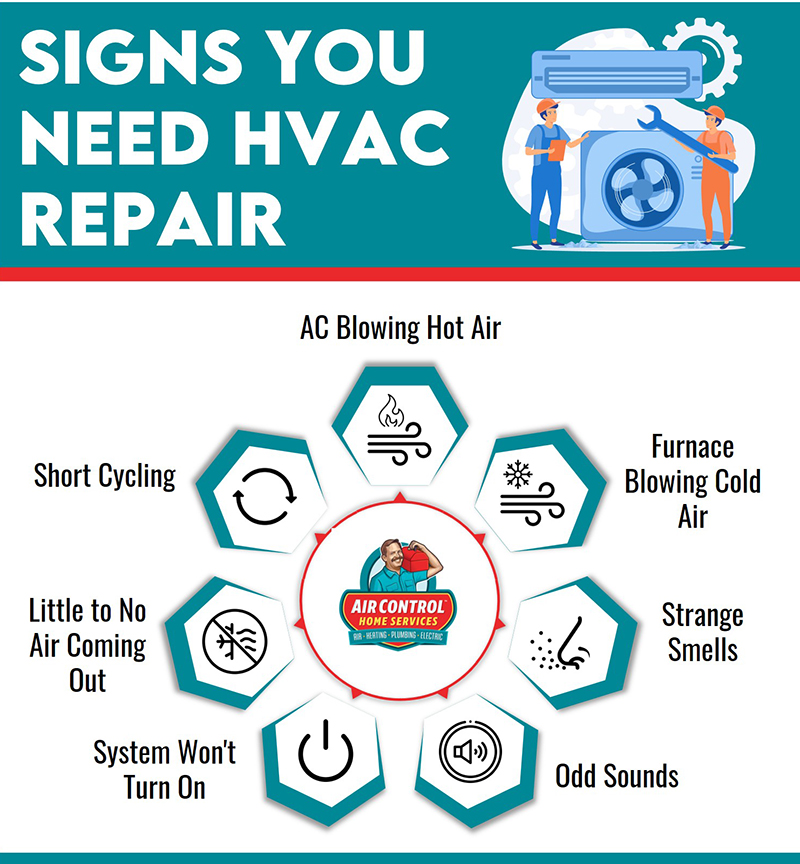
7 Signs You Need HVAC Repair at Your Arizona Home

Anyone living in Arizona knows how important it is to have a properly functioning HVAC system. It’s not uncommon for temperatures to reach triple digits during the summer months and drop into the mid-30s during the winter. When an obvious issue with the system occurs, it’s easy to panic and wonder what the problem is. Understanding the signs that your HVAC system needs repair and what you should do next can significantly improve the condition of your Arizona home.

Contact Us

1. Air Conditioner Is Blowing Warm Air

If your air conditioner blows warm air, it clearly shows that something is wrong with the unit. Try changing the air filter to see if that helps. If it doesn’t work, it could be due to one or more issues, ranging from the ignition system to a problem with a damaged or leaking air duct. As tempting as it is to try to fix it yourself, when you’re desperate for cool air, don’t attempt anything more than changing the air filter. Call Air Control Home Services for AC repair service!

2. Heating Unit Is Blowing Cold

When it’s chilly in Arizona, the last thing you want is to turn on your HVAC system only to find it blowing cold air instead of warm. Replace the air filter and see if that helps. If it doesn’t, call an HVAC technician for heating repair. The issue can stem from several problems, including a malfunctioning thermostat, low refrigerant, a faulty compressor, a clogged condenser coil, or a leaking duct. For safety purposes, don’t attempt to fix the heating unit yourself.

3. Strange Smells Are Coming From Your HVAC System

There should never be strange smells wafting from your HVAC unit. If there are, such as if you smell something burning, turn off the unit immediately and schedule an HVAC appointment. Don’t turn it back on until after you get the okay from one of our technicians.

4. You’re Hearing Uncommon Sounds

You know what your HVAC system sounds like when it works normally. When it’s not and you’re hearing odd sounds like buzzing, hissing, rattling, or clicking, don’t continue to use the HVAC unit. It likely needs a repair due to one or more problems, such as a loose component.

5. Your System Won’t Turn On

need hvac repair

It’s alarming when you’re feeling hot or cold and go to turn your HVAC system on, only for nothing to happen. Before you panic, there are a few reasons your HVAC system might not turn on that don’t necessarily mean it needs a repair or replacement. Check your circuit breaker box to see if the breaker tripped. To do this, go to your breaker box and find the breaker corresponding to your HVAC unit. Turn it off and then on if it seems like it tripped. If this was the cause, your HVAC unit should turn back on automatically.

Pay attention to what happens next. If the breaker trips again, don’t attempt to put it back on. It means there’s a problem that a professional will need to look at. If it seems to be working fine, enjoy your heat or air conditioning, but stay aware that it will not trip again. Let’s say the circuit breaker seems to be working properly, but the HVAC system still won’t turn on. Try changing the air filter. A dirty filter can be a leading cause of many HVAC problems.

If the system still doesn’t turn on after you change the filter, it could be due to a variety of other issues, such as the indoor shutoff switch being in the off position. This switch is located near the air handler or the furnace. There is also an outdoor shutoff switch near the condenser unit. These switches are for heating and cooling maintenance, and if you had your unit services recently, it is possible a technician forgot to press the switch in the “on” position. A clogged condensate drain line can also trigger a fail-safe and will need to be cleared before your system starts to work again.

6. There’s Little to No Air Coming Out

You know the usual strength of the air coming out of your HVAC system. It’s obvious when there’s little to no air coming out, but your system is clearly on. One major reason this may be happening is that your air filter is clogged. Turn off your system and replace your air filter. Then, turn the system back on and see if the airflow gets stronger.

If it doesn’t, there’s another issue. You’ll need a professional to locate the problem, which can range from blocked vents to ductwork leaks or debris blocking the path, a blower motor, a faulty thermostat, or low refrigerant levels.

7. It’s Short Cycling

Short cycling occurs when your HVAC system doesn’t properly complete its entire cycle. For example, it may run briefly and then automatically shut off. This might happen for several reasons, such as an electrical issue, one or more components being worn down, the evaporator coils being frozen, or the filter being dirty.

If your HVAC system is short-cycling, the best first step you can do is to replace the air filter. This will give you an idea of whether that’s the culprit of the short cycling or if it’s something else. If swapping out the air filter for a clean one didn’t work, contact an HVAC technician who can determine the issue.

Don’t miss out on our latest deals! Check out our specials and save big on your next service.

Replace Your HVAC System Filters

If something goes wrong with the system, replacing the current filter is one of the first things you can do to evaluate whether that’s the problem without having to call an HVAC technician. In some cases, the system will resume working normally. The easiest way to ensure you always have a clean air filter available is to buy multiple filters at once and keep them at home. If your HVAC system stops working properly, this will save you the hassle of running to the store to get them.

You should also make sure to replace the filter every few months. Although that’s a general timeframe, some homes may need to replace it sooner rather than later. For example, if you have one or more furry companions living in your home, you might want to replace the filter every couple of months or even every month to ensure the system can operate efficiently without relying on a clogged filter.

Call Today!

Don’t let your Northern Arizona home’s HVAC system let you down when you need it the most. Air Control Home Services services the Lake Havasu City, Kingman, and Bullhead City area, and our HVAC technicians can help install, repair, and maintain your heating units and air conditioning systems. We also have indoor air quality services. Our company can also send plumbers and electricians for general plumbing and electrical services and installation, repairs, and maintenance of water heaters, filtration systems, EV charging systems, panels, and more.

Contact Air Control Home Services today for fast, efficient, and professional service.

Smart Thermostats in Lake Hazasu City, AZ

Boosting Comfort and Energy-Efficiency: Guide to Smart Home Technologies for Arizona Homes

Smart home technologies provide several advantages for homeowners in Arizona. These gadgets have the potential to revolutionize living areas by making them more comfortable and environmentally friendly.

Smart Thermostats

A smart thermostat installation is among the most significant technological advancements for improving residential energy efficiency. Heat waves are common in Arizona, so finding the best way to cool off is essential. These gadgets remember when their owners usually leave the house and change the temperature accordingly. Their controllability via smartphone applications adds an extra level of ease and usability. Some models even reveal how much energy a house uses, which can be useful for developing energy-saving measures.

Smart Light Bulbs

Smart light bulbs are a great way to save energy and make your house more convenient. They make it possible to manage the lights from afar using voice commands or mobile applications. To set the mood you want, simply play around with the brightness and color settings. One way to conserve energy and cut down on power expenses is to schedule lights at specified periods. Connectivity to home automation systems facilitates the easy operation of these smart home gadgets. In comparison to standard light bulbs, smart bulbs use much less energy, making them a more environmentally friendly choice.

Smart Door Locks

Smart door locks provide a contemporary solution to the security concerns of Arizona residents. Users can manage who gets into their houses using these locks, even when they aren’t at home. You won’t need actual keys anymore since you can lock and open them using applications on your smartphone. Homeowners who have visitors or travel a lot may find this feature particularly helpful. Smart locks can even notify you every time a person enters or exits your property.

Smart Security Cameras

Maintaining a solid security system is of the utmost importance in Arizona due to the high incidence of property crimes. Many modern smart cameras come equipped with night vision and two-way audio in addition to the ability to give motion alerts. With this technology, homeowners can rest easy knowing they can monitor their property from any location.

Smart Blinds and Shades

Sunlight has a major impact on interior temperatures in Arizona, making smart blinds and shades a great investment. You can set these automatic window coverings to open and shut according to the time of day or temperature. During the warmest portions of the day, this function keeps the inside at a more comfortable temperature, reducing the need for air conditioning. Not only can these window coverings improve a home’s curb appearance, but they also provide seclusion.

Smart Plugs

Smart plugs allow Arizonans to optimize energy use by using fans, heaters and other appliances at predetermined times. Turning off electronics while they’re not in use is another way they can help reduce energy consumption. When added to automation systems, smart plugs enable the synchronized control of several devices. This feature facilitates the creation of a cozy home atmosphere while using as little energy as possible.

Smart Smoke Detectors

Adding smoke detectors to your home is one of the easiest ways to make it safer. But not all smoke detectors are the same. Many older models lack the advanced technologies found in today’s versions. For instance, with a smart smoke detector, you can receive real-time alerts on your smartphone. This is unlike a traditional detector that doesn’t feature Bluetooth or WiFi connectivity. Two other important advanced technologies in smart smoke detectors include voice alerts and self-testing capabilities. Both features allow you to monitor your home’s safety easily. If possible, you should install smoke detectors in every space throughout your home. The most important places to install them include bedrooms, kitchens and any space that has a fire hazard.

Smart Air Filters

An innovative way to keep the air quality in your home at a high standard is using smart air filters. Using real-time data, these filters can monitor indoor air quality and alert homeowners when it’s time for a replacement. Having clean air is crucial for staying healthy in Arizona, a state with a high concentration of dust and allergens. Smart air filters may be more expensive but they reduce energy consumption and improve indoor comfort with each replacement.

Smart Appliances

Smart appliances revolutionize regular chores by making them more convenient and efficient. Smart refrigerators help reduce food waste by keeping track of when food is about to expire and providing recipe suggestions based on what’s in the fridge. With smart ovens, you can manage the cooking process from a distance, so your food will always turn out correctly. Smart washing machines reduce water and detergent waste while still maintaining cleanliness. Users can easily control these appliances with voice commands or applications thanks to their integration with home automation systems.

Smart Water Leak Detectors

Damage and expenses caused by water leaks can be substantial for homeowners. With the early alerts provided by smart water leak detectors, you can take immediate action in the event of a leak. This function is very necessary to avoid expensive water damage, particularly in Arizona, where water conservation is absolutely vital due to the drought. Installing these devices in basements, kitchens and bathrooms—anywhere water might easily seep in—is a good idea.

Smart Home Hub

A smart home hub coordinates and controls all of a house’s smart gadgets, facilitating their seamless communication. It allows customers to control several devices from a central location, including smart thermostats, lighting and security cameras. Most hubs connect to various devices via WiFi or Bluetooth, allowing them to work with a wide variety of brands and protocols.

Google Nest and Amazon Echo are two examples of proprietary systems that function effectively as smart home hubs and are part of their own ecosystems. Some hubs, such as SmartThings, are compatible with more devices from different companies.

There are several things you need to think about when picking the ideal smart home hub for your home. For starters, you need to think about the features you need, including voice control or automation capabilities. Next, you need to consider how easy the system is to use. The last step is to determine whether the system is compatible with your current devices. Speaking with a smart home hub specialist is a great way to make the best pick.

Maintenance for Smart Home Gadgets

For smart home technologies to work at their best, they need different kinds of care. Smart thermostats, for example, need regular software updates and battery replacements. Regular lens cleaning and battery checks are beneficial for smart security cameras. Software upgrades may be necessary for smart light bulbs. Cleaning filters and inspecting seals are other common forms of routine maintenance for smart home gadgets.

Air Control Home Services is here to help you with all of your smart home gadget installation, repair and maintenance needs. We also specialize in HVAC installations, ductless AC repairs, air purifiers, duct sealing, drain cleaning, EV chargers and much more. Call us now to schedule a smart home assessment for your home in Bullhead City, AZ.

Air Control Home Services

Book Online

Book your service in less than a minute.