Get flexible financing and instant approvals for urgent home repairs—apply online today.

Tag: HVAC Maintenance

Two HVAC units outside of a home

How Arizona’s Dry Climate Affects Your HVAC System

Low humidity, big swings between day and night, and long stretches of sun shape how your home feels in Arizona. Dry air changes how your body cools, how dust moves through a house, and how hard heating and cooling gear has to work. If you have ever wondered why the air feels hot yet lightweight in July or why winter mornings feel extra crisp indoors, this guide is for you. At Air Control Home Services in Lake Havasu City, AZ, we work with these conditions every day, so we’ve learned what helps homes stay steady and comfortable.

Understanding Arizona’s Climate Profile

Arizona’s climate features low relative humidity for much of the year, strong sunlight, and noticeable differences between afternoon and late-night conditions. Desert areas see hot days that cool quickly after sunset. Higher elevations trade some of that heat for colder nights and sharper winter snaps. Dry air carries less moisture, which changes how your home loses and gains heat. It also affects how your skin and lungs feel indoors.

When the air holds little water, evaporation accelerates, which can make heat feel more intense in summer and make winter air feel especially dry. The sun loads heat into roofs and walls each afternoon, so your cooling system must handle both indoor gains and stored heat from the building. This is the core of HVAC in Arizona’s dry climate.

How Dry Air Affects Indoor Comfort

Humidity shapes comfort more than most people realize. In summer, low humidity allows sweat to evaporate quickly. That can help at moderate temperatures, but on very hot days, it can still feel harsh because your body is losing moisture faster than you replace it. In winter, dry air pulls moisture from skin and sinuses, so rooms can feel cooler than the thermostat suggests. Knowing how dry air affects HVAC helps you choose better settings.

Impact on HVAC System Performance

In a dry climate, your cooling system removes less moisture than it would in a humid region, yet it still has to push a lot of heat outdoors. That keeps compressors and outdoor fans busy. Indoors, less condensate on the coil means dust is less likely to stick there, but it also means fine particles can travel farther through ducts if filtration is weak.

Return leaks can pull attic dust into the system and distribute it throughout the system. Filters load up faster in dusty seasons, and coils can still foul when dust mixes with cooking vapors or household debris. The takeaway is simple. Airflow and filtration matter as much as the refrigeration cycle, because clean, steady airflow supports both comfort and equipment health.

Equipment Stress and Wear-and-Tear

High heat and long run times test every moving part. Outdoor units are exposed to direct sunlight and hot air, so condenser fans and capacitors work harder. Compressors experience long cycles in the late afternoons as the building releases stored heat. Indoors, motors are exposed to fine dust that can collect on their blades and housings. Dry air also increases static electricity, which can damage sensitive electronics if grounding is poor. Add big day-to-night swings, and you get expansion and contraction at joints and connections. Over many seasons, that can loosen fasteners and gaskets.

None of this means your system is fragile. It means your gear benefits from cleaning, tightening, and testing at regular intervals, especially ahead of the big heat months.

Indoor Air Quality Considerations

Very dry air shows up in little ways. You touch a doorknob and get a static pop. Skin feels tight. You might notice a scratchy morning throat or more dust on furniture. Your HVAC system can help. A properly sized whole-home humidifier can nudge indoor humidity into a more comfortable range in winter without making rooms feel muggy.

High-quality filtration and sealed ductwork reduce dust movement. If you have a family member sensitive to particles, a media filter or an air purifier with a strong capture rate can make a clear difference. Duct cleaning is also useful when renovation dust, smoke, or heavy buildup is present.

Efficiency and Energy Usage Implications

In hot, dry regions, systems tend to run longer in the late afternoon and early evening. Dirt on coils, weak airflow, and duct leaks each add to run time. You want steady, clean airflow and good heat transfer at the coil to keep cycles reasonable. Thermostat settings can help. Many homeowners prefer a small daytime setback with a comfort bump in the evening, rather than large swings that force the system to play catch-up. Auto fan mode is often the best default. If your home feels stuffy at night, a low, continuous fan schedule for short windows can help mix the air, though you should monitor utility use as you test.

Common Failure Modes in Dry Climates

Several issues often occur in Arizona homes. Dust restricts airflow, overheats motors, and forces compressors to operate at higher pressure. Dirty outdoor coils trap heat, increasing cycle times. Low refrigerant due to a slow leak manifests as reduced cooling and longer runtimes, especially when the sun is high. Clogged filters and return leaks can cause uneven cooling or warm back bedrooms. You may hear rattles from loose panels after a long summer, or from short cycling caused by a safety switch tripping due to airflow limitations. Warning signs include rising utility costs with the same thermostat settings, new noises, and hot spots in rooms that used to cool evenly.

Best Practices for HVAC Maintenance in a Dry Climate

Think of your system as two needs working together. It must reject outdoor heat and admit clean air indoors. Start with filtration. Select the filter type your system can handle and set a schedule to replace it, not just when it looks dirty through the grille. Keep the outdoor unit clear of leaves and windblown debris, and provide clearance on all sides for airflow. Have a licensed technician wash coils with the appropriate cleaners, check the refrigerant charge, tighten electrical connections, and measure static pressure to ensure the duct system is not limiting performance.

Upgrading or Replacing HVAC Systems for Dry Climates

When it is time to replace equipment, pick models built to handle heat and long run cycles. Correct sizing matters more than brand stories. A unit that is too large will short-cycle and leave rooms uneven. A unit that is too small will run nonstop. High-efficiency options with variable-speed compressors and indoor blowers deliver smoother comfort and quieter operation.

Smart thermostats add helpful control, especially when you let the schedule match your routine. Also, choose outdoor units with coil designs that resist dirt, especially in dusty areas. If you are upgrading ducts, request tighter returns and supply ducts, proper sealing, and airflow testing so the new system has a fair shot at peak performance. Our team installs systems every week in these conditions and can walk you through rebates and incentive paperwork.

Cost Savings and Long-Term Benefits

Small improvements add up. A sealed return can shave minutes off each cooling cycle. Clean coils conduct heat more efficiently, so the compressor does not have to run as long on hot afternoons. A fresh blower wheel and correct fan speeds help rooms level out, allowing you to keep setpoints a tick higher in summer while still feeling comfortable.

Request HVAC Maintenance Today

Arizona’s dry climate is manageable when your HVAC system is clean, well-sealed, and set up for long, steady runs. If your system feels tired, rooms are uneven, or your bills are creeping up, a professional check can reset the baseline and point out easy wins. Air Control Home Services offers inspections, cleaning, duct sealing, whole-home humidification, and smart replacements tailored to desert living.

Contact our team or schedule online to set up a visit, ask about our service plans, enroll in our Comfort Club, and keep your home comfortable through every season.

Replacing dirty furnace filter in home

Reasons Why HVAC Maintenance Is Important in Dust-Prone Areas

If you live in a dust-prone area, you face an air-borne battle all year. Much of Arizona experiences rampant dust. Fine, abrasive grit finds its way into everything in Arizona homes. Your home’s HVAC system is no exception to this problem. Ignoring dust buildup is a mistake. It quickly leads to poor performance, and your energy bills will increase. It can even cause system failure. Proactive maintenance is not a luxury here. It is an absolute necessity in a dusty climate.

Your HVAC unit acts as your home’s lungs. It constantly breathes and filters the inside air. When that air is full of dust, the system faces immense stress, and we want you to understand why system care is so crucial.

Dust’s Damaging Effects on Your HVAC System

Desert air creates serious challenges for mechanical systems. The persistent presence of fine dust is very detrimental. These tiny particles act like sandpaper on components. They wear down moving parts and coat everything in grit. This accelerates the wear and tear on your system. It also leads to premature breakdowns.

Dust accumulation makes several parts vulnerable. The filter is the first line of defense. Unfortunately, dust may go around the filter when it’s clogged, coating and compromising critical components. This makes your unit work much harder than it should. Here are a few ways dust causes damage:

  • Reduces system efficiency
  • Increases friction on motors
  • Insulates heating and cooling coils
  • Clogs condensate lines and drains
  • Contaminates indoor air quality

Ignoring these issues leads to more complex repairs or replacements later, making them much more costly. In cases like these, a comprehensive, professional tune-up is best. This measure will help prevent dust damage in the Arizona climate.

Protect Your Air Filters and Indoor Air Quality

The air filter is a crucial component here because it can capture a large amount of particulates, and it can quickly become saturated with dust. As you might expect, this hinders its ability to trap more dirt. This blockage severely restricts airflow, harming the system’s health and energy efficiency.

We recommend frequent filter changes. When the pressure builds up in the system because the filter is so clogged, air has difficulty passing through it. When that happens, the dusty air will push through any existing weakness or tear, directly affecting the air quality inside your home. People with respiratory issues, including allergy and asthma sufferers, are susceptible to this problem. Our routine maintenance reduces this dust load, providing you with cleaner, healthier air inside your home.

Maintain Your Evaporator and Condenser Coils

Heat pump coils handle heat exchange, including both cooling and heating. Traditional HVAC units only have a cooling coil. Dust is terrible for these coils. When dust coats the coils, it impedes heat transfer, preventing them from effectively absorbing or releasing heat.

Your HVAC system must run for longer periods when coils are compromised, as it struggles to reach the set temperature. This wastes a lot of electricity and strains the compressor.

Our experts use specialized cleaners and tools. We carefully remove the grime and dust caked onto the delicate coil fins. This cleaning immediately improves efficiency, quickly reducing your energy consumption. Neglecting this task can result in a permanent efficiency loss. It could even cause the compressor to fail.

Prevent Airflow Issues and Ductwork Contamination

Dust impacts more than just the main components. It affects the entire airflow pathway. When the blower wheel accumulates dust and debris, the motor must work harder to move air. Reduced airflow leads to inconsistent cooling, a clear indicator of lost efficiency. Dust also accumulates throughout your duct system, where it waits to be blown back into living spaces.

Dust enters ducts through small gaps or leaks in dusty areas. Our team will inspect your ducts for these issues and recommend duct cleaning when needed. This removes deep-seated dust and allergens quickly and ensures the conditioned air reaches its destination.

Poor airflow makes your home uncomfortable. This is especially true during Arizona’s hot summers. The unit is constantly fighting dust-caused blockages. Scheduling a maintenance visit helps us identify blockages.

Extend Your System’s Lifespan and Ensure Reliability With Maintenance

Maintenance plays a huge role in a system’s lifespan. It is the most compelling reason to schedule service. We address the wear and tear caused by dust. With maintenance, you prevent the need for early, expensive replacements. A well-maintained system performs well and lasts for many years, resulting in major long-term savings.

Dust and grit increase the risk of a complete HVAC failure. Breakdowns always happen at the worst possible time. Think of the peak of a summer heatwave; an AC failure would be miserable. A tune-up spots small issues immediately. Our technicians work to prevent catastrophic failure by inspecting belts, electrical connections, moving parts, and refrigerant levels.

Fulfill Warranty Requirements

Many manufacturers require professional maintenance for warranty purposes. You need proof of annual service to fulfill requirements, so if a component fails, you need the necessary documentation. If you don’t keep any records, the manufacturer may deny your claim. This is bad news in dusty climates, since the environmental stress can lead to breakdowns, making warranty compliance vital.

Our technicians provide detailed service records, which will prove your compliance. This should give you valuable peace of mind. The manufacturer’s warranty protects your investment, and we ensure every part meets all the required standards.

Invest in Your Comfort and System Health With Air Control Home Services

You can avoid the worry and expense caused by a struggling HVAC system in AZ. Professional maintenance is the single most effective way to fight the dust. It combats the many negative environmental effects. We’ll protect your investment and improve its overall efficiency.

Our team knows the specific challenges you face. This is true for all residents in the Lake Havasu and Mohave County areas. Sign up for our maintenance plan to make routine service easy. We keep your home comfortable and help to keep your bills low. We can assess your home’s air quality and, if needed, install a whole-home air purification system to remove bacteria, pollen, pet dander, and dust. We can also inspect and clean your ductwork and seal or replace any damaged sections. That will ensure a clean flow of conditioned air into your living spaces. Protecting your system and keeping it running well is our top priority.

Contact Air Control Home Services today for more information about the importance of HVAC maintenance in your dusty area.

AC Maintenance in Lake Havasu City, AZ

How To Keep Your AC Running Strong Through Arizona’s Heat

Living in Arizona means facing hot summers, which makes your air conditioner work overtime to keep you cool. Constant use can wear down your AC over time, leading to expensive repairs or a breakdown when you need it most. However, with proper care and maintenance, you can extend the life of your air conditioner and avoid the hassle and high costs of replacements.

Simple cleaning, using the correct thermostat settings, and scheduling regular maintenance can help keep your system running smoothly during the hottest months. At Air Control Home Services in Lake Havasu City, AZ, we’re here to help you maximize your AC’s performance so you stay cool all summer long.

Contact Us

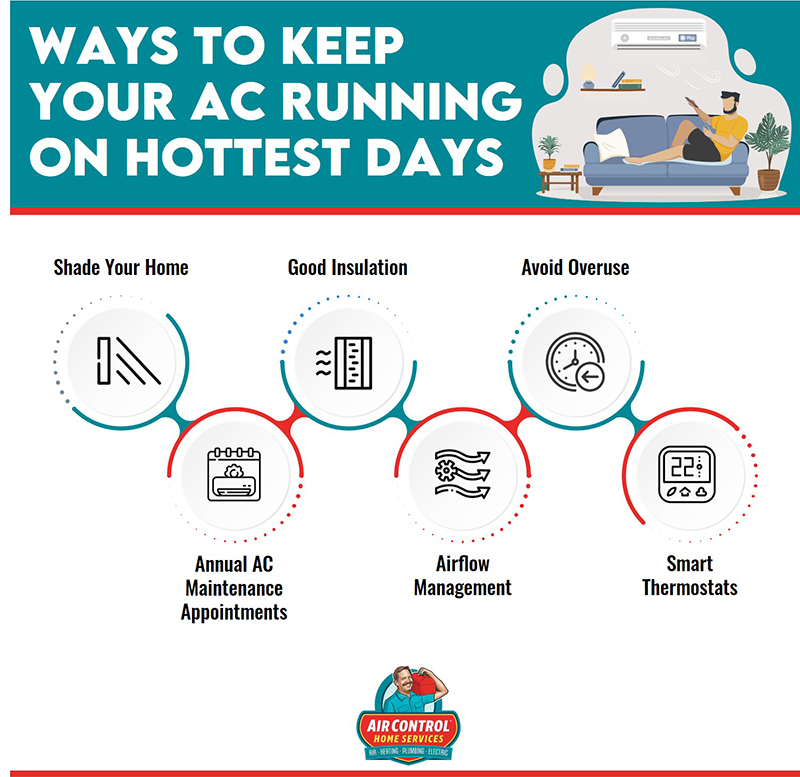
Power of Shade: Protecting Your AC and Home

In Arizona’s heat, one of the best ways to keep your home cool and lighten the load on your air conditioner is by providing shade. Direct sunlight hitting your house can raise indoor temperatures, causing your AC to work harder than necessary. While window coverings such as blackout curtains and blinds can help, you can improve their effectiveness by adding outdoor shading.

Planting trees and vines or installing awnings and shade sails can reduce the heat entering your home. Planting shade trees on the west side, where the sun is strongest in the late afternoon, helps block the sun’s rays and cools your home. This simple change also reduces the load on your air conditioning system.

You can also install reflective window films that block UV rays while still allowing beneficial natural light to enter your space. These films can reduce heat gain by up to 60 percent, making them a smart investment for homes in Arizona. Keeping your home cooler reduces the workload on your AC, prolongs its lifespan, and lowers energy bills.

ways to keep ac running hot days

Yearly Maintenance: Keep Your AC in Top Shape

To ensure your AC system lasts longer and operates in the Arizona heat, annual maintenance is essential. As your AC runs in triple-digit temperatures, it collects dirt, dust, and debris that can clog filters and impede airflow. An air conditioner with clogged filters and dirty coils must work much harder to cool your home, resulting in energy waste, higher bills, and unnecessary wear on the system. With professional AC maintenance, you can rest easy knowing your system is in great condition.

Schedule professional maintenance at least once a year, before summer. A technician will clean the coils, check refrigerant levels, and perform other necessary tasks to ensure your system runs. HVAC technicians should only perform maintenance. Yearly maintenance helps prevent expensive repairs, improves cooling efficiency, and keeps you compliant with the manufacturer’s warranty.

In hot climates like Arizona, it is especially important to keep up with maintenance since your air conditioner runs almost every day from June to September. Regular service ensures that your system is ready to handle the summer heat without significant issues.

Insulation: Unseen Protector of Your Home’s Coolness

Proper insulation is crucial for keeping your home cool and ensuring that your AC system runs in Arizona’s extreme temperatures. It helps maintain a steady temperature by preventing cool air from escaping and warm air from entering. If your home is lacking insulation, your AC will have to work harder to cool it, leading to higher energy bills. With the right insulation, you can stay comfortable without overworking your AC.

Begin by checking the insulation in key areas of your home, particularly in the attic. Since heat rises, your attic is where you will lose the most cool air if it is not insulated. Adding or upgrading attic insulation can improve the temperature regulation of your home. If you live in a multi-story house, be sure to consider the walls and floors between rooms as well. Insulated walls and floors help retain cool air and prevent heat from entering your living spaces.

In addition to adding insulation, seal any cracks or gaps around windows, doors, and ducts. Even small leaks can make your air conditioner work harder. Caulking and weatherstripping are easy solutions that help create a tight seal and maintain your home’s internal temperature.

Airflow Management: Let the Cool Air Flow

Good airflow is essential for a working air conditioner, especially in intense heat. Without proper airflow, your system struggles to distribute cool air, making your home uncomfortable and causing the unit to overwork. To improve airflow, clear any obstructions like furniture or curtains from vents and registers. If you have ceiling fans, adjust them to enhance the circulation of cool air. Simple adjustments can improve both comfort and efficiency.

In Arizona’s climate, it’s important to clean your ducts. Over time, dust and debris accumulate in your ducts, obstructing airflow and spreading allergens. Having a professional duct cleaning every few years keeps your system running and ensures that cool air flows throughout your home.

Don’t forget to check the filters in your air conditioner. Clean filters improve airflow. If your air conditioner is in an attic or another dusty area, you might need to replace the filters more often. Maintaining proper airflow is one of the easiest and most effective ways to keep your AC system running.

Avoid Overuse: Know When To Take a Break

In Arizona, it might be tempting to run your air conditioner all summer. However, doing so can cause wear and tear on the system. Although your air conditioner can withstand the heat, constant use without breaks can reduce its lifespan.

If your home feels too warm even with the AC running, check if your thermostat is set too low. Setting the temperature too low can make your system work harder than necessary. Try setting your thermostat to a more reasonable temperature, like 78°F. This keeps your home cool while preventing the system from running nonstop.

Another way to prevent overuse is by using a programmable thermostat. This device allows you to adjust your air conditioning when you’re not at home or when you’re sleeping. For instance, you can increase the temperature while you’re at work or during the night, and then cool your house back down before you return home or wake up.

Bring In Smart Tech

Smart thermostats are a game-changer for managing your AC in Arizona’s heat. You can control your home’s temperature from anywhere, even when you’re not at home. Many of these devices learn your schedule and adjust. For example, your thermostat can raise the temperature while you’re at work and cool down right before you get home.

Take Care of Your AC Today

Taking the right steps to care for your air conditioner can impact its lifespan, especially in Arizona’s extreme heat. Regular maintenance, proper settings, and proactive repairs can all help keep your system running. If you want to ensure your AC runs, Air Control Home Services is here to provide expert cooling services and advice. Let us assist you in staying cool for years to come. We also offer expert HVAC services, plumbing repairs, electrical installations, and advanced air quality systems.

HVAC Insulation in Lake Havasu City, AZ

Reducing Arizona Cooling Costs Using Insulation

Cooling your Lake Havasu City, AZ, home can be expensive, especially during the heat of summer. However, there are ways to reduce your cooling costs, including the use of insulation. If your home isn’t adequately insulated, consider upgrading it.

The Role of Insulation

Arizona’s summer temperatures can rise above 100 degrees Fahrenheit. In fact, temperatures have surpassed 100 plus degrees 60 times each year for the last few years. This can lead to your cooling equipment running frequently to maintain a comfortable indoor temperature. If your home isn’t well-insulated, it can allow heat from outside to enter, potentially resulting in high energy bills. By ensuring there is a barrier between your home and the outdoors, you can reduce heat transfer and lower cooling costs. You might also call for fewer heating and AC repairs, since your systems won’t have to work as hard.

Considering R-Value

Insulation products are rated using an R-value, which represents how well they can resist the flow of heat. Insulation with a high R-value represents optimal and efficient insulation. Arizona benefits from high R-value insulation, especially during extreme heat. Keep in mind that the R-value can be impacted if there are air leaks in the areas where the insulation is located.

You can increase the R-value of your insulation by layering different products. Some products can be layered easily, such as rigid foam boards and fiberglass batting. However, products like spray foam insulation and cellulose don’t pair well, as they can experience a compression effect that can decrease R-value over time as the products settle. There may be a specific order in which products must be installed, which a professional can help you address.

If you’re planning on layering insulation to increase R-value, work closely with a knowledgeable professional. There are often local building codes that dictate what kinds of products can be used together and how they need to be installed.

Sealing Your Home

Insulation also helps close any cracks, gaps, or open spaces that allow heat to enter your home. Before having insulation installed, you can seal these spaces with products like caulk or expanding spray foam.

Addressing Hot and Cold Spots

Uneven insulation throughout your home can lead to inconsistent indoor temperatures. This results in overusing your cooling equipment to address areas that are uncomfortably warm.

Considering Insulation Location

Several key areas of the home are often under-insulated. Heat rises, so attics tend to be the main areas of homes that experience efficiency issues. Windows and doors can also be problematic, especially as they age. It’s common for gaps and cracks to form around these areas, allowing air to enter.

Wall insulation provides a strong barrier for thermal comfort and efficiency. Most homes have this insulation installed before the drywall is put up, but it can usually be added to walls later as well.

Because basements and crawl spaces are underground, they tend to be cooler than the rest of the home. However, some degree of heat can still seep through the foundation of your home if the insulation isn’t adequate.

Different Types of Insulation

Insulation comes in several varieties. Some are more suited to the warm climate of Arizona than others.

Spray Foam Insulation

Spray foam insulation provides a very tight seal against the outdoors. This airtight seal is also highly resistant to moisture and mold. It can be used in areas such as walls, attics, and ceilings, effectively filling in very small spaces. Spray foam insulation typically has a very high R-value. Open-cell spray foam is breathable and usually has an R-value between 3.5 and 4.0 per inch, while closed-cell spray foam is dense and typically has an R-value between 6.0 and 7.0 per inch.

Keep in mind that spray foam insulation can be more expensive than other insulation options. However, it is well worth the money spent considering the savings on your cooling costs. Additionally, you may be eligible for a tax credit when you upgrade your insulation using a spray foam product.

Radiant Barriers

Ideal for very hot climates, radiant barriers reflect heat away from your home instead of absorbing it. They are usually used in attics to facilitate the reflection of heat off the top of your home. Radiant barriers are often used in conjunction with other types of insulation, such as spray foam, fiberglass batting, and rigid foam boards. Professional installation is important for ensuring that a radiant barrier functions correctly. It’s important to note that radiant barriers do not have an R-value since they operate differently from other insulating products.

Fiberglass Batting

A common insulation product used in homes all over the country, fiberglass batting is made of very fine pieces of glass. These panels can be cut to fit specific spaces around your foundation, in crawl spaces, and in your attic. The R-value of fiberglass batting varies depending on the thickness of the product. For example, a 3.5-inch-thick sheet will have an R-value between 11 and 15 per inch. Thicker batting, between 8 and 12 inches, will have an R-value between 30 and 38 per inch.

Fiberglass insulation doesn’t always reduce cooling costs well since it allows air gaps to occur. Professional installation can help minimize this risk but doesn’t eliminate it entirely.

Rigid Foam

A rigid foam board insulation can be installed in basement walls, attics, and exterior walls. It has a very high R-value, which falls between 3.6 and 4.2 per inch for expanded polystyrene foam boards and 6.0 to 6.5 per inch for foam boards made from polyisocyanurate. This is the most efficient rigid foam insulation option available.

Unfortunately, rigid foam offers little flexibility during installation. It can be cut to fit certain spaces, but full access to these areas is necessary to install the insulation properly. It holds up well to moisture, resists mold, and promotes a very tight barrier.

Blown Cellulose

This eco-friendly insulation product is usually made from recycled paper products. It comes in the form of loose fill and is applied to specific areas using professional equipment. Blown cellulose insulation is ideal for hard-to-reach areas in your attic or walls. It’s also very cost-effective and provides a moderate R-value of approximately 3.2 to 3.8 per inch.

Blown cellulose insulation can settle into place over time, reducing its effectiveness. To save money in the long run, you may want to consider investing in a higher-quality product.

Reducing Your Carbon Footprint

Insulation helps lower your cooling costs, but reducing the amount of energy your home uses also reduces your carbon footprint. This action helps slow climate change by decreasing the number of greenhouse gases in the environment. Additionally, it promotes better indoor air quality by reducing pollution.

Air Control Home Services can help reduce your cooling costs in several ways. We offer routine AC maintenance that keeps your air conditioning equipment working efficiently and affordably. We even have a Comfort Club Maintenance Program to help you save money while keeping your AC and heater working at their best. Our repairs can address issues impacting cooling efficiency. Upgrading your insulation helps create an insulating barrier that keeps cool air inside. Contact Air Control Home Services in Lake Havasu today for more information about insulation and its role in reducing cooling costs.

HVAC Services in Lake Havasu, AZ

10 Easy Ways to Boost Energy Efficiency in Arizona

Updated: 4/30/25

It takes a lot of energy to stay comfortable in Arizona. Fortunately, there are plenty of quick and easy ways to reduce your energy consumption. A little bit of effort can do a lot to slash your power bill.

The HVAC team at Air Control Home Services explains how you can cut down on energy costs with these simple tips. Read on to learn more or contact us today!

Contact Us

1. Install an Awning

Heating and cooling are responsible for most of the average home’s energy consumption. You can reduce your cooling costs by minimizing the amount of heat that enters your home. Most of that heat enters through the windows in the form of light.

You can use awnings to prevent that light from entering your window. You should install awnings over windows that face south or west. Windows that face north or east receive less sunlight, so you don’t need to prioritize them.

When you choose your awnings, look for products with an AERC energy rating. It proves that the awning can reduce your energy costs. You should also consider investing in a retractable system. They make it easy to strike the perfect balance between heat management and lighting.

2. Choose the Right Curtains

hot boost energy efficiencyYour curtains can also protect your home from excessive sunlight, but their effectiveness depends on their color. Dark colors naturally absorb light, so they tend to heat your home. On the other hand, light curtains struggle to block the sun. Medium-colored curtains with white plastic backings usually get the best results. They can eliminate up to a third of the heat gain from your windows.
3. Use Natural Shade

Careful landscaping offers an additional line of defense against the sun. After all, trees can provide just as much shade as an awning. They can also cover a larger percentage of your home. Shrubs and other small plants can also help. While they do not provide much shade, they can absorb heat and cool the area around your home.

It’s vital to choose plants that thrive in Arizona’s climate. Healthy plants will cover more of your property and offer more protection against the heat. Native species have the best odds of survival. They also require less effort and fewer resources to maintain than other plants. Local landscaping companies can help you find the right species for your property.

4. Try a Smart Thermostat

Many of us waste a surprising amount of energy. For example, it’s easy to forget to deactivate your air conditioner before leaving your home. Smart thermostats solve that problem. They work by connecting your phone to your heating and cooling systems. You can control them with an app. Some thermostats can also track your location and turn your air conditioning off as you leave your home.

Most smart thermostats offer other helpful features. For example, some models can calculate the optimal heating and cooling schedule for your home. Other thermostats can track the temperature in specific rooms and make the appropriate adjustments. All of those features save energy by eliminating human error. They can even make your home more comfortable at the same time.

Don’t miss out on our latest deals! Check out our specials and save big on your next service.

5. Prioritize Efficient Cooking

Your oven can work against you when you want to stay cool. It is essentially a large space heater, and it will force your air conditioner to do extra work. You should try to avoid using your oven on hot days. If you need to bake, try to do so at night to minimize the strain on your air conditioner.

Fortunately, there are a lot of ways to cook without heating your home. Microwaves, small toaster ovens, and slow cookers are great examples. They will release some heat, but they are more efficient than traditional ovens. If the weather is good, you should also consider cooking outdoors to keep the heat outside your home.

6. Search for Leaks

Most homes are full of little cracks and leaks, especially near the doors and windows. They are also common in the attic and basement. Those gaps allow air to escape your home. If your home is cooler than the environment, that will raise the internal temperature. If your energy bills are too high, you should find and seal as many of those leaks as possible.

7. Unplug Your Devices

All electronic devices consume electricity and produce heat. While most devices have a negligible impact on their own, they quickly add up. You should always turn lights, computers, and other electronics off when they are not in use. Some devices, such as chargers, can even draw power while they are turned off. You can eliminate that phantom load by unplugging them.

If you want to save even more energy, you should look for efficient alternatives to old electronics. For example, LED lights use roughly 75% less electricity than incandescent bulbs. When you replace old devices, look for products with an ENERGY STAR certification. They are significantly more efficient than the alternatives.

8. Fix Your Ducts

Your air ducts connect your HVAC system to the rest of your home. Unfortunately, they are fragile and prone to leaks, which reduce your HVAC system’s efficiency. They can also lead to uneven heating or spread dust through your home.

If you notice those problems, you should call a professional duct sealing service. Experienced HVAC technicians can test the ducts to identify all of the leaks. They also have the tools to quickly repair leaks without causing new problems. Most duct repairs take less than a day, so they are one of the fastest ways to improve your home’s energy efficiency.

9. Replace Old Systems

All machines degrade over time, including your heating and cooling systems. As those systems get older, they start to waste energy. Most HVAC systems will survive for roughly 15 years. If any of your HVAC devices are older than that, you should consider replacing them.

Fortunately, new systems benefit from modern technology. They are more consistent, efficient, and reliable than older models. While installing a new AC or furnace is a major investment, it’s also one of the best ways to save energy.

10. Schedule Regular HVAC Maintenance

If you want to save energy, you need to keep your HVAC system in good condition. Dirt and debris tend to build up inside both heating and cooling systems. That can interfere with heat transfer, which forces your system to work harder and waste energy. Poor airflow, electrical issues, and other minor problems can also reduce your system’s efficiency. A quick tune-up will address all of those issues. We encourage you to schedule maintenance twice per year to get the most out of your HVAC system.

Call Our Team Today

If you want to maximize your home’s energy efficiency, you should consult the experts. We can identify your home’s weak points and find simple solutions. At Air Control Home Services, we have been providing comprehensive heating and air conditioning services along with plumbing, and electrical services in the Lake Havasu area for several decades. Our diverse range of services makes it easy to optimize every aspect of your home’s energy consumption. You can count on us to lower your energy bill and reduce your environmental impact.

We are ready to help you save energy. Contact Air Control Home Services today to schedule your consultation.


HVAC Maintenance in Lake Havasu City, AZ

12 Reasons To Invest in a Maintenance Plan for Your HVAC System

A certified HVAC technician must perform regular maintenance service to ensure that your HVAC system stays in tip-top condition. Your heating system needs service in the fall and your cooling system in the spring. One of the best investments you can make for your HVAC system is to join a maintenance program.

What Is an HVAC Maintenance Plan?

HVAC contractors offer HVAC maintenance plans to ensure an HVAC system receives the maintenance needed to function optimally. Each plan typically includes scheduled maintenance visits for the spring and fall, during which an HVAC technician will inspect, clean, test, and service all the components inside your heating or cooling system. This maintenance plan aims to ensure that your heating and cooling systems are operating at their peak efficiency level.

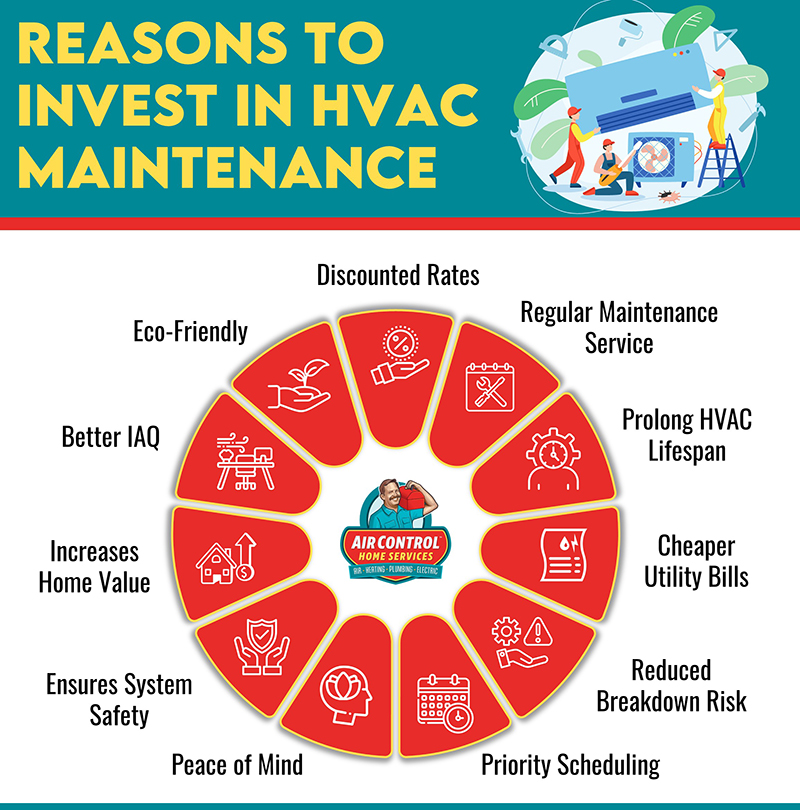
1. Discounted Rates

reasons invest hvac maintenanceOne of the most significant benefits of investing in an HVAC maintenance plan is that you enjoy a discounted price on maintenance service. Most HVAC contractors will offer a discount when you join their plan because they know they will be guaranteed service over other HVAC contractors. Some maintenance plans will even include a discounted rate on repair service if you experience a breakdown at any point.

2. Never Forget To Get Maintenance Service

Because HVAC maintenance is only done a couple of times a year, it can be easy to forget. Unfortunately, most HVAC manufacturers require you to get annual maintenance, or they’ll void the remaining warranty on your system. When you sign up for a maintenance plan, you don’t have to worry about getting service, as your HVAC contractor will call you to schedule your necessary maintenance service. This is a great way to help ensure you never forget to have your HVAC system serviced.

3. Prolong HVAC System Lifespan

Just like any other appliance in your home, regular maintenance for your HVAC system will make a big difference in its overall lifespan. When all the internal components receive the care they need, they’re much less likely to break down and lead to major system damage. With home heating and cooling systems being quite expensive for the average homeowner, it only makes sense to do everything possible to get as much out of your investment as possible.

4. Cheaper Utility Bills

When temperatures outside reach their extremes, your HVAC system constantly runs to keep up with your comfort needs. Having a well-functioning HVAC system that’s properly serviced can make a massive difference in its overall operating efficiency. If you compare the performance of an HVAC system serviced with one that wasn’t, the one receiving service will be much more energy efficient. This will lead to lower utility bills throughout the worst temperature extremes.

5. Reduced Breakdown Risk

Probably one of the best reasons to invest in an HVAC maintenance plan is that it will help to greatly reduce your risk of experiencing a breakdown. During your maintenance appointments, our technicians will evaluate your entire system and identify any areas of worn-out parts or malfunctioning components. This will allow us to catch issues while they’re small and easy to fix.

6. Priority Scheduling

Another benefit of an HVAC maintenance plan that many providers will offer is priority repair service. If your HVAC system happens to break down, you typically get service before other homeowners with a malfunctioning HVAC system who aren’t part of a maintenance plan. This can go a long way in minimizing your discomfort and help to ensure that your HVAC system receives swift repair service when necessary.

7. Peace of Mind

An HVAC maintenance plan is a great way to have peace of mind about your HVAC system’s functioning. You don’t have to worry about remembering to schedule maintenance service, and you don’t have to worry about whether your system will break down or even make it through the upcoming season. Having a professional assess your HVAC system can put your mind at ease.

8. Ensures System Safety

Relying on fuel like natural gas, heating oil, or propane to create heat for your home is standard. Unfortunately, when all these fuels are burned, they produce toxic emissions. Typically, these emissions are vented via your chimney to the outdoors, where they can disperse into the air. However, if there’s a problem with your heating system, the toxic emissions may back up inside your home.

This can be very dangerous for you and your family and can even be lethal in some instances. When you invest in a maintenance plan for your heating system to be serviced every fall, our technician will test to ensure that no toxic fumes are being produced inside your home. This will ensure the utmost safety for you and your family.

9. Increases Home Value

If you plan on reselling your home at any point in the future, it’s important to be mindful of the care that all of your appliances receive. When you get regular maintenance service for your HVAC system because you’re part of a maintenance plan, it shows home buyers that you’re taking care of the appliances. Home buyers are likely to pay more for a home they know the appliances have been kept up with than one where a homeowner doesn’t service their systems.

10. Better Indoor Air Quality

One lesser-known benefit of being part of an HVAC maintenance plan is that it helps enhance the air quality inside your home. When one of our technicians services your system, they will ensure that all the internal components are adequately cleaned. Additionally, during their evaluation of your system, they’ll be on the lookout for any signs of mold or mildew growth. It doesn’t matter whether it’s inside your ductwork or your HVAC system. They will let you know about the problem so that you can have it fixed before it drastically reduces your indoor air quality level.

11. Allows You To Be More Eco-Friendly

Another benefit of joining an HVAC maintenance plan that is commonly overlooked is that it allows you to be more eco-friendly with your energy consumption. Nowadays, many of us are looking to do our part in reducing our energy usage to help promote a better living environment for all.

When your heating or cooling system is serviced regularly, you can be assured that it’s operating at its peak efficiency level and not wasting any excess energy. In fact, the Department of Energy has estimated that HVAC systems that don’t receive proper maintenance service can use up to 30% more energy than those that do.

12. Other Maintenance Plan Benefits

Only maintenance plan members receive exclusive monthly specials, a dedicated concierge phone line, and no overtime charges.

Exceptional HVAC Maintenance Service

Air Control Home Services provides exceptional HVAC maintenance service for the entire Kingman, AZ, area, giving you peace of mind with our expert HVAC tune-up plans. We can also assist with all your air conditioning, heating, indoor air quality, plumbing, and electrical needs. Call our office today to schedule a service consultation.


Air Control Home Services

Book Online

Book your service in less than a minute.