Get flexible financing and instant approvals for urgent home repairs—apply online today.

Tag: electrical panels

Electrical Panels in Lake Havasu City, AZ

When to Replace Your Electrical Breaker Box: Warning Signs Every Homeowner Should Know

Your circuit breaker panel is a very critical part of your home’s electrical system. It protects your appliances, electronics, and wiring from overloads and potential fire hazards. When problems arise, you may wonder if it is better to repair it or if it is time to consider a full replacement.

Knowing the difference between when an issue is repairable and when it is a warning sign of deeper trouble will help to save you money. It will also prevent dangerous malfunctions from occurring and extend the lifespan of your system.

Understanding What Circuit Breakers Do

Circuit breakers shut off electricity when there is too much current flowing through a circuit. This helps prevent overheating, appliance damage, and electrical fires. Each breaker in your panel controls an area of your home, so you will be able to isolate problems without shutting down the entire system. As long as everything’s functioning correctly, your breakers don’t demand much attention.

When to Repair a Circuit Breaker in Your Home

You can resolve some circuit breaker problems with simple, limited-scope repairs. Let’s take a look at the most common situations where a repair is the right choice.

A Single Breaker Keeps Tripping

If just one breaker trips on a regular basis, the issue might be a worn or faulty breaker switch. This is an easy and inexpensive fix that one of our licensed electricians can handle quickly and efficiently. Replacing that one breaker is usually enough to restore safe operation.

There Are Loose or Corroded Connections

In some cases, the issue lies in the wiring inside the electrical panel, not the breakers themselves. If a member of our team finds loose terminals, corrosion, or minor wear, we may need to clean and tighten the connections or replace all of the affected wires.

Breaker Trips After a Power Surge

A power surge, whether caused by lightning, utility grid issues, or large appliances cycling on and off, can overwhelm your electrical system in an instant. When this happens, your circuit breaker trips to protect your home’s wiring and devices. However, if your breaker trips repeatedly after a surge or fails to reset properly, it may signal deeper problems.

Even if the breaker seems to be working after a surge, it may have sustained hidden damage that weakens its protective function. You might notice flickering lights or scorched outlets, which is an indication that the issue is surge-related. That said, a repair is often a great option, especially when the breaker’s housing is intact and the internal mechanisms are functioning.

Breaker Installation Was Not Completed Properly

Sometimes, a breaker trips or malfunctions because it was not seated properly in the panel or was not installed correctly. This can result in intermittent power loss or frequent tripping of the circuit breaker. If a member of our team finds that the breaker is in good condition but wasn’t secured or aligned correctly, a quick adjustment or reinstallation can resolve the issue.

Breaker Panel Is in Good Overall Condition

If your breaker panel is relatively new, up to code, and still meets your home’s electrical demands, individual repairs usually make the most sense. This is especially true if the rest of the system shows no signs of wear. In situations like this, acting quickly will help you avoid future damage and maintain a safe system.

When to Replace the Entire Breaker Panel

While repairs can be enough at times, sometimes a complete panel replacement is the better solution. Let’s explore when replacement makes the most sense for your home.

The Panel Is More Than 25 Years Old

There are many older homes in Lake Havasu City, including those built before the 1990s. These homes often have original breaker panels, so they are unable to handle today’s electricity usage. If your panel is more than 25 years old, consider an upgrade, even if it hasn’t failed you yet. Outdated panels deteriorate over time and often lack the safety features required by modern building codes.

The Panel Is From a Recalled Manufacturer

Breaker panels from brands such as Federal Pacific Electric (FPE) or Zinsco have a well-documented history of failure and a significant fire risk. If your panel bears one of these names, replacement is strongly recommended for the safety of your family.

Your Home Has a Higher Electrical Demand Than the Panel Offers

Relying heavily on air conditioning, pool equipment, and modern appliances during the summer is common in Lake Havasu City. If your system trips frequently or you’re adding new high-demand equipment, like an EV charger in your garage, it may be time to upgrade to a 200-amp panel. Upgrading gives your system the capacity to handle additional circuits safely, without increasing the chance of overloading.

Multiple Breakers Are Failing

If more than one breaker is malfunctioning at the same time, or if you’ve needed several repairs in a short span of time, these are strong indicators that the system is failing as a whole. In this case, a complete panel replacement is going to be more cost-effective and reliable in the long run.

You Notice Signs of Overheating

Burn marks, melted insulation, a burning smell, or a hot panel are signs of dangerous heat buildup in your electric system. These issues suggest deeper internal damage that repairs may not resolve. Replacement makes sure that your entire system meets current safety standards.

How Replacement Can Save You Money in the Long Run

While a simple repair might seem like the most affordable option up front, replacing an aging or frequently tripping circuit breaker can actually be more cost-effective over time. Older breakers wear out and become unreliable with use, especially if they have been reset several times or have experienced multiple electrical surges. These failing components lead to recurring issues that pose a risk to your appliances and overall electrical system.

Continuously paying for service calls and repairs adds up. If the problem persists, you’re essentially putting a bandage on a larger issue. Replacing a faulty breaker with a new, more reliable unit can eliminate future service costs for years to come. It will also ensure that your system is better protected from short circuits, overloads, or potential fire hazards. A new breaker brings your family peace of mind, so you know that your electrical panel is operating at its safest and most efficient.

Contact a Reliable Electrician Today

Knowing when to repair or replace your circuit breaker is crucial for protecting your home and preventing future electrical issues. If you’re noticing warning signs when it comes to your circuit breaker, taking action now can save you from headaches in the future. Regardless of what you decide, quick action and expert guidance are essential. Electrical issues are never something to postpone, and a small issue today could become worse tomorrow.

Call Air Control Home Services today to schedule an inspection or consult with our electrical services experts about the services you need in your home. Our team is here to keep your home’s electrical system safe and reliable.

Electrical panel replacement in Lake Havasu, AZ

12 Warning Signs That Your Electrical Panel Needs Replacement

Electrical panels play a crucial role in delivering power throughout your home. These panels connect external sources of electricity to your home’s internal wiring system to power your lights, appliances, and electronics. Because an electrical panel is often located in the basement, garage, or home utility closet, it may be tempting to ignore the unit or overlook its significance. However, a faulty breaker box can deprive your entire home of electricity. There are key indicators that signify you need a replacement long before an electrical emergency.

1. Frequent Breaker Tripping

If your breakers trip frequently, your home may need an electrical panel replacement. Circuit breakers trip or turn off power to prevent fires from electrical overload. When a home’s appliances or energy usage exceeds the system’s capacity, the electrical panel undergoes this tripping process far more often than normal. Excessive breaker tripping can damage electronic circuit boards and other essential components. Upgrading the panel helps increase electrical capacity to relieve any strain on your system.

2. Rust or Corrosion

Rust and corrosion can indicate panel aging or exposure to water. This is often the result of excessive humidity or other forms of moisture exposure over time. Rust can disrupt the flow of electricity and constitute a serious fire hazard or pose the risk of electrocution. Corrosion means that metal parts have oxidized and accumulated extensive buildup over time. If you notice rust or corrosion on wires, cables, screws, or panel doors, contact an electrician to replace your breaker box.

3. Unusual Panel Sounds

Strange noises from your electrical panel can indicate loose wiring connections or damaged components within the device. For example, sounds like crackling, sizzling, or popping can signify electrical arcing or sparks occurring inside the panel. Even if you hear subtle or irregular buzzing and humming, it is time to schedule a professional inspection. Ignoring these auditory warnings can allow electrical problems to escalate into a fire hazard.

4. Unexpectedly Higher Energy Bills

A faulty or outdated electrical panel can cause your system to draw more power than usual from the grid. For example, rusty wiring or frayed connections within the panel may result in inefficient electricity distribution. This causes the panel to use more energy to meet your household’s electrical needs. If you notice an unexplained spike in utility bills, a malfunctioning electrical panel may be the culprit.

5. Unpleasant Odors

A persistent burning odor from your electrical panel indicates an ongoing problem within the system. Burning plastic smells can result from the disintegration of wiring or faulty metal components. The smell of ozone may arise from electrical sparks or loose circuit breakers that have enabled arcing. Musty or smoky odors can also result from burning insulation. A panel replacement may be necessary to eliminate the risk of electrical fires and should be performed as soon as possible.

6. Dimming or Flickering Lights

Dimming or flickering lights can signify underlying electrical issues. This uneven lighting means that your panel may not be able to accommodate your home’s electrical draw. Any strain on your home’s electrical circuits can create voltage fluctuations that disrupt the performance of your lights.

7. Scorch Marks

Discoloration or charring on your electrical panel often means that overheating has occurred within the unit. This constitutes an immediate safety hazard. Look for burn marks or black spots on the panel doors, wiring, or connected outlets.

8. Melted Electrical Wires

The insulation of your electrical panel should remain intact and free of damage. If the outer casing of your wiring begins to melt, the exposed connections can increase the risk of arcing, short-circuiting, or combustion. Melted wiring is often the result of overheating, excessive demand, or an outdated system. Regardless of the cause, it is advisable to seek professional intervention and replace the panel if necessary.

9. Increased Demand

If your electrical demands have increased, it is important to have your panel upgraded to accommodate your needs. All electrical panels have ratings that indicate the correct amperage for circuit loads. For example, a modern home may require an electrical panel with 200 amperes to accommodate central air conditioning along with all other major appliances. If your panel’s amp rating is far lower than 200, it is time to replace the breaker box.

Similarly, installing brand-new appliances like refrigerators, EV charging stations, freezers, dryers, electric stoves, or hot tubs may all require a new panel with a higher amperage. While it may feel tempting to simply plug your new appliances into a power strip, doing so can increase the risk of overload and prevent your devices from working effectively. A modern panel promotes the correct circuit availability to ensure seamless provision for any new electrical demands.

10. Non-Compliance With Safety Standards

Modern electrical panels must meet current safety standards and building codes. For example, a panel may come certified or have a label from a reputable testing agency such as Underwriters Laboratories (UL). If your panel lacks UL certification or an equivalent label, it is time for an inspection to ensure that your breaker box is compliant with the latest regulations. Ask your electrician to replace the non-approved panel with a modern UL-listed unit. From insurance claims to your home’s resale value, it is important to keep your electrical system up to date with all recent rules and requirements.

11. Inconsistent Power Supply

Irregularities among outlets or major devices usually indicate problems with the electrical panel. For example, perhaps your microwave operates weakly at various times during the day, or your power tools cannot perform adequately in the garage. If your breaker system has started to fail, its internal components can struggle to provide consistent power distribution. This can result in a pattern of dips and power surges throughout your home. Replacing the electrical panel can restore the balance needed for reliable power delivery within your household.

12. Aging or Outdated Panel

According to the Department of Energy, an electrical panel may last anywhere from 25 to 40 years. If your panel is over 20 years old, ask an electrician to inspect the unit and determine the estimated range for replacement. If your home is decades old, it may still have an outdated fuse box system. Fuse boxes are incompatible with the electrical demands of modern technology, and the old hardware constitutes a fire hazard. Replacing the fuse box with a current panel is the best way to give yourself peace of mind and ensure adequate electrical capacity.

Air Control Home Services Local Electrical Professionals

Replacing your electrical panel can ensure that your system maintains peak performance suited to your household’s needs. Air Control Home Services provides electrical panel services for homes in Lake Havasu City, AZ, and the surrounding areas. In addition to electrical panel replacement, we also offer a variety of services, including whole-home rewiring, whole-home surge protection, and residential lighting upgrades. We can also install an electric vehicle charging station at your residence.

Contact Air Control Home Services today to schedule an appointment for all your electrical needs at your Lake Havasu residence.

Electrical services in Lake Havasu City, AZ

Can Electrical Breakers Go Bad?

Electrical circuit breakers serve as the first line of defense in protecting your home from a possible incident. Typical electrical breakers will do their job without a problem for years or even decades. When they stop working properly, it can lead to many functional issues and several potential safety risks. Here is a look at how electrical breakers may fail and what the associated signs of failure tend to be from the electrical team at Air Control Home Services.

Contact Us

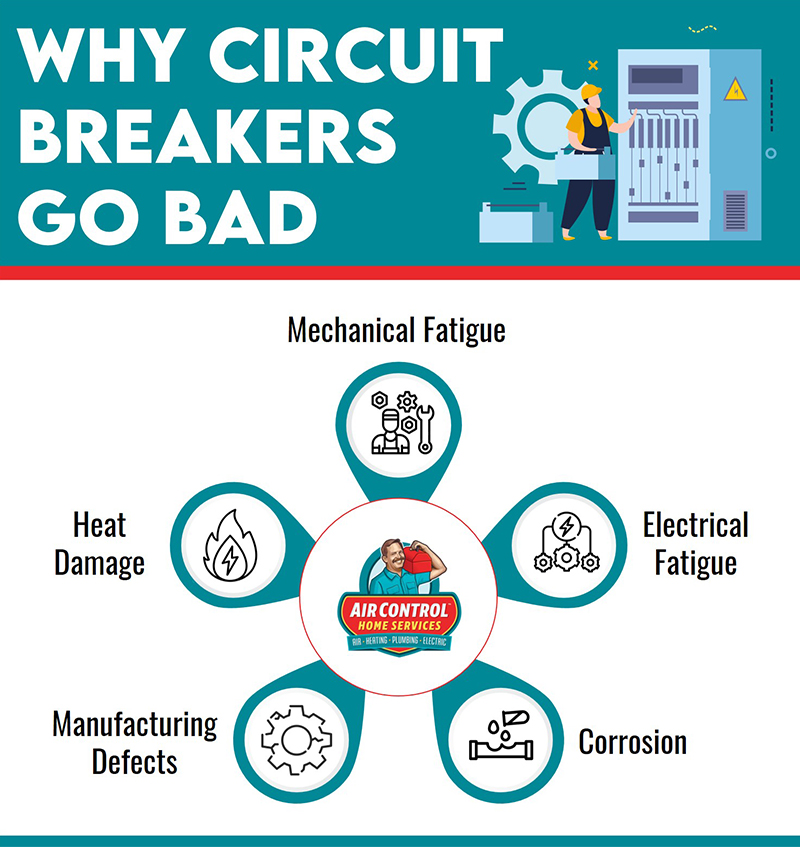
Mechanical Fatigue

A breaker is effectively a switch, and it operates mechanically, just like any other on-off switch. The components tend to be stiffer, though. Consequently, the influence of mechanical fatigue makes weakening more obvious than it might be with a normal switch. Friction can also wear the metal down. Likewise, banging or even constant vibrations can loosen soldered components.

Wear and tear causes the metal components inside the breaker to lose their springiness. Over time, this can cause the metal to move farther from closing the circuit. More worrisome, the electricity will still try to jump the gap for a while. Consequently, the circuit breaker may operate in an unsafe condition because the electricity is arcing.

There are several signs of mechanical fatigue in a circuit breaker. First, it might not trip as quickly as it should. Second, it could trip intermittently or only when under extremely high loads. Third, there may be an electrical sound near the box because of the electricity arcing. Fourth, the breaker could trip faster and more often than it should. Finally, extreme wear could cause the circuit to break permanently to the point where you wouldn’t be able to reset it manually.

Electrical Fatigue

People tend to think of electricity as this ephemeral thing that just comes and goes without doing much other than turning lights on. However, electricity stresses everything that its current runs through, and it can slowly break down the insulation inside the circuit breaker. It also can erode the metal surface, reducing the quality of the contact and encouraging arcing. An excessive load could also weld the circuit. Electricity can even slowly change the characteristics of the metal, amplifying or reducing resistance and conductivity.

Depending on the nature of the electrical fatigue, the breaker might fail to break or simply trip and then quit working. Electrical fatigue also can cause the breaker to perform poorly, potentially tripping at lower or higher loads than expected.

High-usage circuits are more likely to have breakers that experience electrical fatigue. If someone runs devices that aren’t right for the power specifications on the circuit, this will speed up the process. For example, a high-capacity freezer operating out of spec for the circuit will drive fatigue.

why circuit go bad

Corrosion

Electrical circuit breakers sit inside panels that are often in locations like basements and service closets. This keeps them out of the way, but they also sit in places where the air usually doesn’t circulate well. Humidity can cause moisture to collect inside the circuit breakers. Over time, the moisture will react with the breakers’ metallic elements.

Notably, the presence of electricity doesn’t help. Electricity often encourages oxidation because it speeds up reactions between chemicals in the humid air and the metals in the breakers. Also, corrosion can cause the breakers to arc, leading to a feedback loop where more reactivity drives more corrosion.

Corroded breakers cause numerous problems. If you use equipment that’s sensitive to signal stability in the line, those devices may not work as well. For example, it could take longer than usual to charge your phone because it’s not getting stable electrical current.

As conductivity breaks down in the circuit, it may trip because of a false positive. Essentially, the breaker detects that something is wrong with the current and flips. This is just because the corrosion is messing with the circuit, but the breaker isn’t advanced enough to handle that scenario.

In extreme cases, you may see visible signs of corrosion. Dirty or rusty materials may collect in the circuit, inside the panel, or below the box.

Unsurprisingly, anything that drives humidity makes corrosion worse. Flooding is always bad, even if you can dry the area out quickly. You should always ask one of our electricians to check the breakers after any flooding has occurred.

Manufacturing Defects

Not every circuit breaker that comes off the factory line is in good enough condition to do the job. Quality control in the industry is excellent, but the process isn’t perfect. Companies sometimes mislabel breakers, leading to installations with the wrong capacities or fittings. Also, internal elements like solder points can suffer damage during the shipping or installation process.

The worst sign of a manufacturing defect in an electrical circuit breaker is a noticeable smell. It may be a detectable smell of ozone if there’s arcing. However, extremely defective breakers that don’t trip can overload. The result is melting plastic in the breaker’s housing, and you can smell smoke as the plastic melts. In the worst-case scenario, the plastic could catch fire.

Another sign of a manufacturing defect is that the breaker fails under normal load far sooner than you’d expect based on the manufacturer’s indications. Alternatively, the breaker might not trip at all, especially if it’s a mislabeled high-capacity breaker. The breaker also might not fit tightly in the socket if some components are loose. In extreme cases, there could be a noticeable gap around the breaker in the socket.

Heat Damage

Over the lifetime of any electrical circuit breaker, a lot of heat will transfer through its components. This is normal, but it also will affect the breaker’s performance with age. Particularly, thermal trip elements inside the breaker will slowly stop performing at their expected breaking points. Especially if a circuit breaker has exceeded its mechanical life expectancy, you may notice this problem. You can test for it from a distance by pointing a thermal imager at the panel. If you see a warm spot around one breaker or a cluster of breakers, then there’s a good chance that heat is causing some problems.

Heat damage generally causes electrical resistance to increase in a circuit breaker. Higher resistance can trip the thermal element faster. However, a total failure of the breaker might result in it not detecting an overload at all, just allowing the current to flow through no matter what.

You may also notice voltage drops that can affect the performance of your household devices. The issue is most common in power tools, but some sensitive electronics may refuse to work if the voltage is too far out of spec.

Note that not all heat damage is age-related. If there is a manufacturing defect, there might be excess heat coming from a circuit breaker early in its anticipated lifespan.

Call Air Control Home Services

Our team at Air Control Home Services performs a host of electrical services for residents of Lake Havasu City, AZ and the surrounding area, including work on electrical panels, wiring, lighting, EV chargers, and whole-house surge protection.

If you’re concerned about the electrical breakers in your home, call us right away at Air Control Home Services, so we can send an electrician to find out what’s happening.

Everything You Need to Know About Electrical Panels

Everything You Need to Know About Electrical Panels

Updated: January 26, 2025

At the heart of every house’s electrical system lies one or more electrical panels, which control circuit loads, distribute electricity, and ensure safety. Any Lake Havasu City homeowner or electrician working on a residential property would do well to familiarize himself with the many varieties of electrical panels, as well as their functions, applications, installation procedures, and maintenance needs.

The team at Air Control Home Services explains everything you need to know about your electrical panel. Read on to find out more, or reach out to us with any questions you have!

Contact Us

Main Breaker Panel

The main breaker panel is where you’ll find the circuit breakers that regulate the flow of electricity to different rooms in your house. It serves as the main hub for the home’s electrical distribution, controlling everything from outlets to appliances. In an emergency or repair, this panel’s primary circuit breaker can cut electricity to the entire house, making it an essential safety element.

Where the main power line enters the house is usually where you’ll find the primary breaker panel. This central location guarantees effective distribution of electricity to all locations. Securing the panel to a wall, typically in a basement, garage, or utility room, is the first step in the installation procedure. The electrician will next attach the incoming power line to the main breaker and, one by one, install circuit breakers on the circuits that need power.

Main Lug Panel

Main lug panels differ from main breaker panels because they lack main circuit breakers. Instead, they rely on an independent disconnect switch, typically located outside the panel or in a separate area of the house. If a building or residence has more circuits than the main breaker panel can handle, a backup panel is usually necessary.

Installing the panel requires running heavy-gauge wires from the panel to the main breaker panel or an alternate power source. To avoid electrical risks, electricians must ground the panel and check that all connections are tight.

Subpanel

To direct electricity to individual rooms or circuits in a house, an electrician may install a subpanel, which is an additional electrical panel that connects to the main breaker panel. An electrical feeder wire extends from the main breaker panel to the subpanel, allowing electricity to flow between the two. Installing a subpanel is a common practice in larger homes or places with high power demands, like home offices or workshops, when the main breaker panel can’t manage all the electrical loads.

Step one in installing a subpanel is finding a good spot to attach it and then running the feeder cable and connecting it to the main panel’s double-pole breaker. After that, the electricians will distribute power to the specified circuits by attaching individual circuit breakers to the subpanel.

Don’t miss out on our latest deals! Check out our specials and save big on your next service.

Transfer Switch

Houses that use backup generators must have a transfer switch. In the event of a power outage, it allows for a smooth transition from utility power to generator power. Automatic and manual transfer switches are both available. In contrast to an automatic transfer switch, which detects power outages and automatically switches to generator power, a manual transfer switch requires the homeowner to turn on the power source.

Connecting the transfer switch to the generator and main breaker panel is an important part of the installation process. To avoid electrical risks, electricians must keep all connections tight and ground the switch correctly. In fully automated systems, the transfer switch gets hardwired into the generator’s control panel.

Fuse Box

As an alternative to modern circuit breakers, the older style of electrical panel known as the fuse box protects electrical circuits using fuses. When a fuse detects an overload, it will blow to cut power to the circuit, protecting it from potential harm or fire. Fuse boxes are more common in older buildings and homes, but they are also present in some newer ones.

Assembling a fuse box requires fastening it to a wall and linking the primary fuse to the incoming electricity line. After that, electricians will connect individual fuses to the circuits that need power. To ensure adequate protection, the amperage rating of each fuse should correspond to the electrical load of the linked circuit.

Smart Panel

Modern electrical panels with built-in sensors and other smart technologies can track and control your energy consumption in real-time like never before. In addition to allowing for remote control and monitoring, smart panels can connect to home automation systems.

Connecting the incoming power line to the main breaker and firmly attaching the smart panel to a wall are the two basic steps in installing one. The next step is for the electricians to link the smart panel to the home’s Wi-Fi network and attach individual circuit breakers. To connect the smart panel to other smart home gadgets, they might need to run extra wires.

Maintenance Requirements for Different Types of Electrical Panels

To keep your home’s electrical system safe, reliable, and efficient, it is vital to maintain the electrical panels. Different types of panels necessitate different maintenance methods.

You can start by inspecting the main breaker panel regularly for signs of corrosion, damage, and secure connections. To make sure it trips properly when an overload occurs, test the main circuit breaker regularly. To avoid electrical problems and overheating, you must keep the panel clean and dust-free.

Also, check the main lug panels regularly to make sure there is no obvious damage and that all connections are tight. Because there is no main breaker on these panels, you must ensure the separate disconnect switch is in good working order. To keep overload protection in place, you’ll need to inspect individual circuit breakers regularly.

Inspecting subpanels is necessary for checking connections and grounding. Look for frayed wires or faulty connections. An expert can perform overload tests on the subpanel circuit breakers to ensure they will protect the system properly.

Regular testing is also required to ensure that transfer switches, whether manual or automatic, work properly in the event of a power loss. Grounding and connection inspections are of the utmost importance for their safe operation. Automatic transfer switches may also require software upgrades and testing under simulated power loss scenarios.

Even though they aren’t as popular, fuse boxes still require routine inspection to make sure the fuses are appropriate for the circuits they protect. Important things to remember include checking for adequate grounding and replacing blown fuses quickly. Preventing overheating and fire concerns requires keeping the box clean.

Smart panels necessitate regular software and physical inspections. Checking the connections and breakers regularly is key to their safe operation. Updating the panel’s software also ensures it will work with new features and devices, which improves its capacity to monitor and manage energy. Dust accumulation can lead to overheating; wipe the panel regularly to avoid this.

Anything to do with electricity can be dangerous, and it is a safe bet to let professionals handle your electrical panel services!

Air Control Home Services is here to meet all of your electrical maintenance needs. We also help homeowners in Lake Havasu City, AZ with HVAC installations, ductless AC repairs, duct sealing, drain cleaning, and much more. Call us today to schedule an electrical installation or inspection for your home.

Air Control Home Services

Book Online

Book your service in less than a minute.