

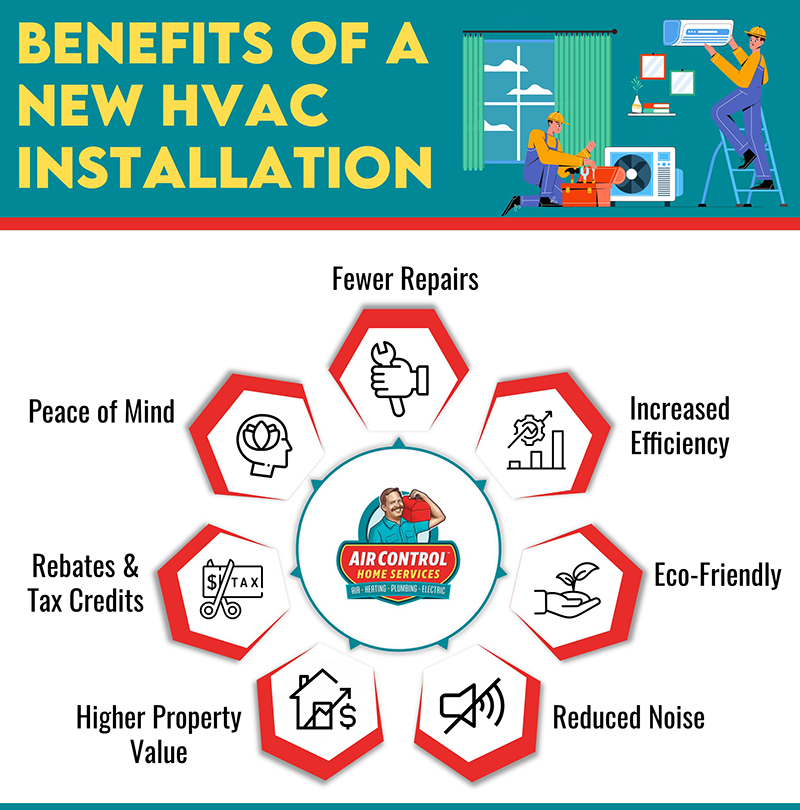
7 Benefits of a New HVAC Installation
Buying a new HVAC system in Lake Havasu City, AZ, is an investment. However, your outdated system probably costs more than you realize. Repairs and high energy bills gradually add up. New systems are reliable and efficient, relieving stress and maintaining a consistent temperature in your house. You’ll also reap the benefits of the latest technological advancements.
1. Fewer Repairs
HVAC systems typically need service at one time or another. However, outdated units break down more frequently, resulting in increasingly expensive repairs. This affects your household budget and sometimes leaves you dealing with uncomfortable temperatures. You’ll pay for the initial investment and installation of the new system, but you won’t have to worry about unexpected breakdowns. If you remember to schedule routine HVAC maintenance, you might not be faced with repairs for years.
2. Increased Efficiency
 As time passes, HVAC system components gradually wear out. Technicians can replace broken parts, but your equipment may eventually struggle to keep up with the demand. Your system may short cycle before reaching a comfortable temperature, cool your house unevenly, or produce weak airflow.
Many homeowners adjust their indoor temperature frequently, thinking it will force the HVAC system to reach their desired setting. Unfortunately, this adds strain to a potentially already overworked system. Your energy bills rise as your equipment draws more power. Eventually, the system may shut down completely, or worse, overheat and start a fire in your home.
New HVAC systems offer maximum efficiency. With no broken or outdated parts, they’re ready to heat and cool your home for many years. They operate without strain, reducing your energy bills and environmental footprint.
Upgrading your HVAC system also gives you access to advanced technology. Modern HVAC systems have upgraded features, such as variable-speed compressors and energy-efficient settings. These features provide a system that uses less electricity than older models. Their improved insulation reduces the risk of leaks that drive down efficiency, and newer designs maximize ventilation for superior airflow.
3. Environmental Protection
Newer HVAC systems burn less fossil fuel than outdated models. Many older models also use R-22 refrigerant for air conditioning purposes, which the Environmental Protection Agency (EPA) banned in 2010 because it contributes to ozone depletion. You can still use your existing unit, but R-22 is increasingly difficult to source. Since the ban, manufacturers have switched to environmentally friendly alternatives.
4. Reduced Noise
Worn-out units tend to make rattling, clanging, or banging sounds. Modern systems are quiet, allowing you to enjoy your day without distractions. Some manufacturers specifically design their units to produce as few decibels during runtime as possible.
5. Higher Property Value
For homeowners, an upgraded HVAC system means that maintenance is manageable. New technology can provide convenience and efficiency. These factors boost your property’s value. If you’re looking to sell your home soon, a new HVAC system may be worth the investment.
6. Rebates and Tax Credits
State and federal governments often provide rebates and tax credits for homeowners who purchase energy-efficient products, including HVAC equipment. This offsets the cost so that you can install new HVAC equipment on a budget. Our team can provide you with information on how you can qualify for tax credits and rebates.
7. Peace of Mind
If you’re hoping that your HVAC system will last a few more years before needing to be replaced, you may want to reconsider. An upgrade now can save you a lot of stress and money. You won’t have to worry about your HVAC system shutting off in the middle of the night or on a holiday, leaving you scrambling to find emergency repairs. Instead, you’ll coast through extreme temperatures with safe and reliable heating and cooling.
Likewise, upgrading before the busy season starts makes it easier for professionals to work around your schedule. If you have already upgraded prior to the busy season, you can relax for the rest of the year knowing that you’re protecting your family.
Who Needs a New HVAC System?
Generally, HVAC systems last 15 to 25 years. Regular maintenance maximizes their life span, but every system wears out eventually. If your HVAC system is older than 25 years, you may not know when the last replacement occurred. If the equipment keeps breaking down, we recommend replacing your model.
Air Control Home Services repairs most issues, but some malfunctions require immediate replacement. For example, a cracked heat exchanger could leak carbon monoxide (CO) into your home, causing CO poisoning. Instead of trying to repair the crack, we recommend having your equipment replaced.
Undersized HVAC systems also require a replacement because they can’t keep up with your home’s demands. Inconsistent temperatures, continuous running, high energy bills, low airflow, and high humidity indicate that you need larger equipment. We’ll inspect your home and choose prospective models that meet your needs.
You might need to upgrade if you want to reap the benefits of smart technology in your house. Many outdated HVAC systems are incompatible with smart thermostats. Once you’ve switched to a modern system, you’ll have access to advanced features, such as voice activation, remote controls, and geofencing.
Can You Install a New HVAC Unit in an Old House?
Generally, we can upgrade old homes with new HVAC units. However, we’ll inspect your house first to make sure that the structure can support the system. If your house has weak insulation, we may recommend upgrading your insulation first. Otherwise, a new HVAC system will suffer from air loss, which defeats the purpose of upgrading.
We’ll also review your home’s size and layout. Heat pumps often require updated ducts and plenty of space to operate. Some older homes don’t have enough space for outdoor units, indoor units, or new ductwork, so we might recommend ordering a ductless mini-split instead of a whole-house system.
What Happens During Installation?
When you call Air Control Home Services, we’ll send one of our team members to your house for a free estimate. We will inspect your house and discuss the brands, fuel types, and energy efficiency ratings that suit your home size and budget. Afterward, we’ll size your new furnace and schedule your appointment.
Before our team arrives, we recommend clearing the installation site for easier access. Remove appliances, furniture, and belongings, and keep pets and small children away from the site.
HVAC installation usually can be completed in one day, although larger systems may take longer. We start by removing your existing HVAC unit and transporting it out of the house, then preparing the site for your new equipment.
Next, we will install your upgraded HVAC system. This is a delicate process that involves replacing various components, including wiring, refrigerant lines, and evaporator coils. We’ll test your new equipment to ensure that it’s working properly, then clean up the site and answer final questions before we leave.
Rely on Your Local Experts
Air Control Home Services offers the installation and repair of various types of heating and cooling equipment. We also provide routine maintenance. Our other services include duct sealing, indoor air quality assistance, plumbing, and electrical work. Call us at Air Control Home Servicesin Lake Havasu City today to take advantage of our five-star customer service.

